
Single-Parameter vs. Multi-Parameter Water Quality Sensors: A Buyer's Comparison Guide
Short answer: this is an architecture decision, not a product-quality decision. A dedicated single-parameter sensor is usually the correct fit when one measurement drives the control action, when a transmitter channel already exists in the panel, or when the parameter must be isolated from everything else in the sample. A consolidated multi-parameter setup — an online multi-parameter sensor, a 6-in-1 analyzer, a multi-channel controller, or a full online monitoring system — is usually the correct fit when three or more parameters must be read at the same point, on the same time base, through one maintenance visit and one data path.
Most procurement mistakes in this category come from comparing individual instruments instead of comparing configurations. Two projects can buy the same pH performance and end up with very different site realities: one panel with four transmitters, four power feeds, four calibration routines and four data streams; or one controller, one protocol stack and one service visit. The difference is usually visible on paper before any purchase order is raised, provided the buyer compares the right dimensions.
This guide sets out six comparison dimensions and a seven-step method that can be applied to any water quality sensor manufacturer's catalogue, including the categories commonly quoted at this stage: the online residual chlorine sensor, the online turbidity sensor, a digital pH sensor with IoT support, the online dissolved oxygen sensor, the online multi-parameter water quality sensor, the 6-in-1 water quality analyzer, the multi-parameter water quality controller and the online multi-parameter water quality monitoring system. It does not declare a winning architecture, because no architecture wins across every project. It gives the buyer a repeatable way to reach a defensible answer.
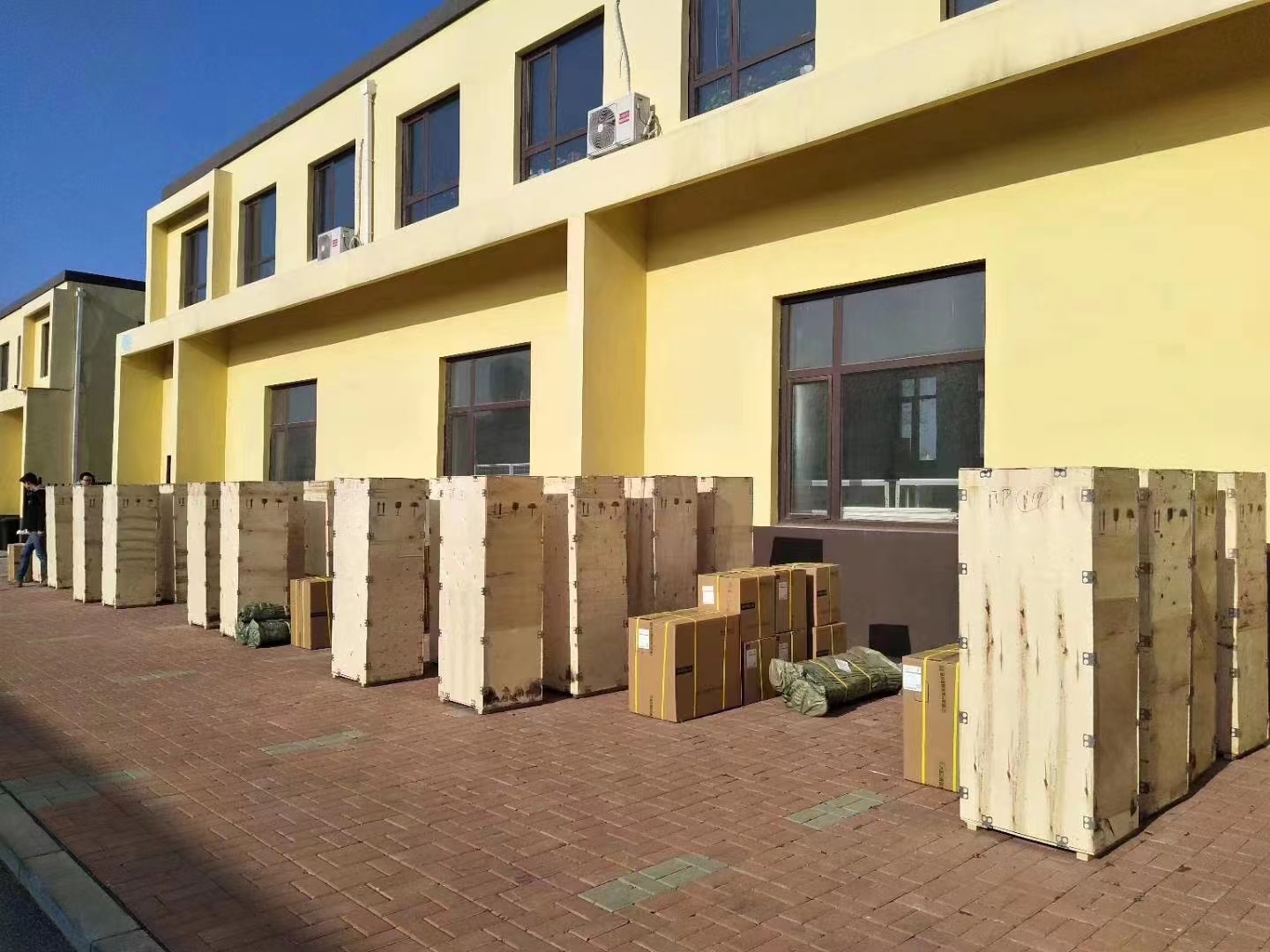
Water quality instrument production at Kacise. The architecture decision is made on paper first: parameter count, controller capacity and maintenance workload.
What the two architectures actually are
Definition: a single-parameter architecture assigns one sensor and one measurement principle to one parameter, with the signal carried either by a dedicated transmitter or by one channel of a multi-channel controller. The dedicated instrument types are familiar: an online residual chlorine sensor for disinfection control, an online turbidity sensor for filtration performance, a digital pH sensor with IoT support for a control loop, an online dissolved oxygen sensor for aeration. Each is optimised for one measurement and can be replaced, calibrated or isolated without touching the others.
Definition: a multi-parameter architecture consolidates several measurements into one probe body, one analyzer housing, or one monitoring system that shares a controller, a power supply, a data path and a maintenance routine. The categories here include the online multi-parameter water quality sensor, the 6-in-1 water quality analyzer, the multi-parameter water quality controller, and the online multi-parameter water quality monitoring system that packages sensors, controller and communications into one station.
The distinction matters because the two architectures fail, scale and cost money in different ways. A single-parameter installation grows linearly: each added parameter brings another sensor, another channel, another calibration event. A multi-parameter installation grows in steps: capacity is either available in the controller or it is not, and the step is a large one. Neither behaviour is inherently better; both must be matched to the parameter list the project actually needs.
Why this decision now sits earlier in the buying process
Integrated measurement is no longer a niche preference in this market. Grand View Research valued the global water quality sensor market at USD 6.2 billion in 2025, and the same research house estimates that multi-parameter units accounted for over 60% of new sensor sales globally in 2024, up from 42% in 2020. The same source places Asia Pacific at a 48.2% revenue share in 2025.
Two cautions belong next to those figures. First, research houses do not share one product boundary: estimates for the same year differ widely depending on whether analyzers, meters, controllers and complete monitoring systems are counted alongside sensors. The direction of the shift is a more reliable takeaway than the exact value. Second, an aggregate share says nothing about an individual project. A site with one regulated parameter and an existing transmitter channel is not obliged to follow a market trend toward consolidation.
What the trend does change is the supply base. Manufacturers increasingly organise catalogues around integrated probes and shared controllers, and the portfolio of KACISE reflects that structure: online multi-parameter water quality sensors such as the KWS-800 Series (listed as measuring pH, conductivity, dissolved oxygen and turbidity), alongside separate families for COD, TOC and organic matter, ORP, fluorescence dissolved oxygen and oil-in-water detection. “Multi-parameter” therefore does not mean every parameter lives in one probe. The buyer's first job is to work out which parameters genuinely share a sample point, and which only appear together in the quotation.
The six comparison dimensions that decide the architecture
1. Parameter coverage and cross-interference
Start with a parameter list, not a product list. For each parameter, record what the measurement is used for: a regulatory report, a control action such as aeration or dosing, or a trend record. A parameter that triggers a control action deserves the simplest, most isolated measurement path available. A parameter that only supports reporting can often tolerate sharing a flow cell.
Cross-interference is where consolidation earns or loses its value. Parameters measured in the same sample rely on different principles — electrochemical, optical, ion-selective — and co-locating them means the design must manage optical and electrical crosstalk, fouling on shared surfaces, and sample conditioning for all parameters at once. This is general engineering practice rather than a property of any one instrument, which is exactly why it should be tested at the shortlist stage instead of assumed from a datasheet headline.
A practical check: ask how many of the required parameters are genuinely measured inside one probe body, and which are separate probes sharing only a controller. KACISE's integrated multi-parameter design is described as 5-in-1, which is a statement about probe-level consolidation, not about covering every parameter a plant might monitor.
2. Controller and IoT integration
Count the signal paths before comparing any specification. Four single-parameter transmitters typically mean four analog loops, four power feeds, four configuration routines and four points of failure in the panel. A shared controller or multi-channel monitor means one protocol stack, one configuration file and one place to look when data stops.
Digital output matters more than the label suggests. KACISE products support RS-485 and Modbus digital outputs and are described as compatible with SCADA, PLC systems and IoT platforms, which is the practical requirement for any station that must feed a central system rather than a local display. KACISE also lists a redundant output design — RS-485 together with 4–20 mA — as its control against communication failure. For a buyer, that redundancy question is worth asking of every supplier: if the digital link drops, is there still an analog signal the PLC can act on?
3. Calibration and maintenance workflow
Maintenance is the dimension most often estimated badly. Single-parameter architecture means more probes, and therefore more calibration events, but each event is narrow, quick and independently replaceable. Multi-parameter architecture means fewer probes and fewer site visits, but a shared failure point and a more involved service procedure when one channel drifts.
Build the workload in hours rather than impressions: events per year multiplied by handling and calibration time, plus travel. Then add the fouling picture for the actual water. KACISE lists automatic cleaning functions, an anti-interference design, and a self-cleaning, easy-maintenance approach with detachable probes and smooth surface coatings as its controls against sensor fouling; wetted parts are specified in PTFE and 316L stainless steel as material-selection controls against corrosion. Those are design measures, not guarantees, and they should be confirmed against the specific probe and the specific water matrix.
4. Footprint in cabinets and remote sites
Panel space is finite. Four transmitters, four sets of gland entries and four power supplies consume DIN rail that a project may not have, particularly in a retrofit where the cabinet already exists. A consolidated analyzer or controller reduces the panel to one housing and one set of terminations.
The same logic applies with more force at remote sites. A river, lake or aquaculture station running on solar has a hard power budget, and every additional transmitter is another load. KACISE describes its integrated 5-in-1 multi-parameter design as low-power and solar-compatible, and lists sleep mode combined with solar power compatibility as its control against low battery in wireless units. Those characteristics are relevant precisely because the alternative — four powered transmitters — multiplies the same load four times.
5. Portable versus online duty
The architecture question changes shape when the duty is portable. A handheld multiparameter water quality sensor is consolidated by nature: one instrument, one battery, one log. A portable optical dissolved oxygen meter is single-purpose by nature, and that is a strength when the job is a spot check or a calibration cross-check on an installed optical DO probe.
The decision rule is straightforward. Continuous control, trending and reporting are online duties and belong to the online architectures. Verification rounds, site surveys and calibration checks are portable duties, and a handheld multiparameter unit frequently replaces several single-purpose portables simply because the technician carries one case instead of four. Where a project mixes both duties, the portable instrument should be selected for the parameters it will actually verify, not for the full plant list.
6. How each architecture scales when parameters are added later
This is the most useful question in the whole comparison, and the least frequently asked: how many parameters can the controller accept before a second controller is required? A single-parameter architecture answers predictably — add a sensor, add a channel, cost rises in a straight line. A multi-parameter architecture answers in steps: the next parameter may be free capacity, or it may require a new controller and a new panel section.
Map the growth path over the asset life rather than the first phase. If the plant expects to add ammonia nitrogen, nitrate or additional optical parameters in later phases, the spare channel capacity of the chosen controller becomes a decision criterion in its own right, and it should be recorded next to the price rather than discovered two budget cycles later.
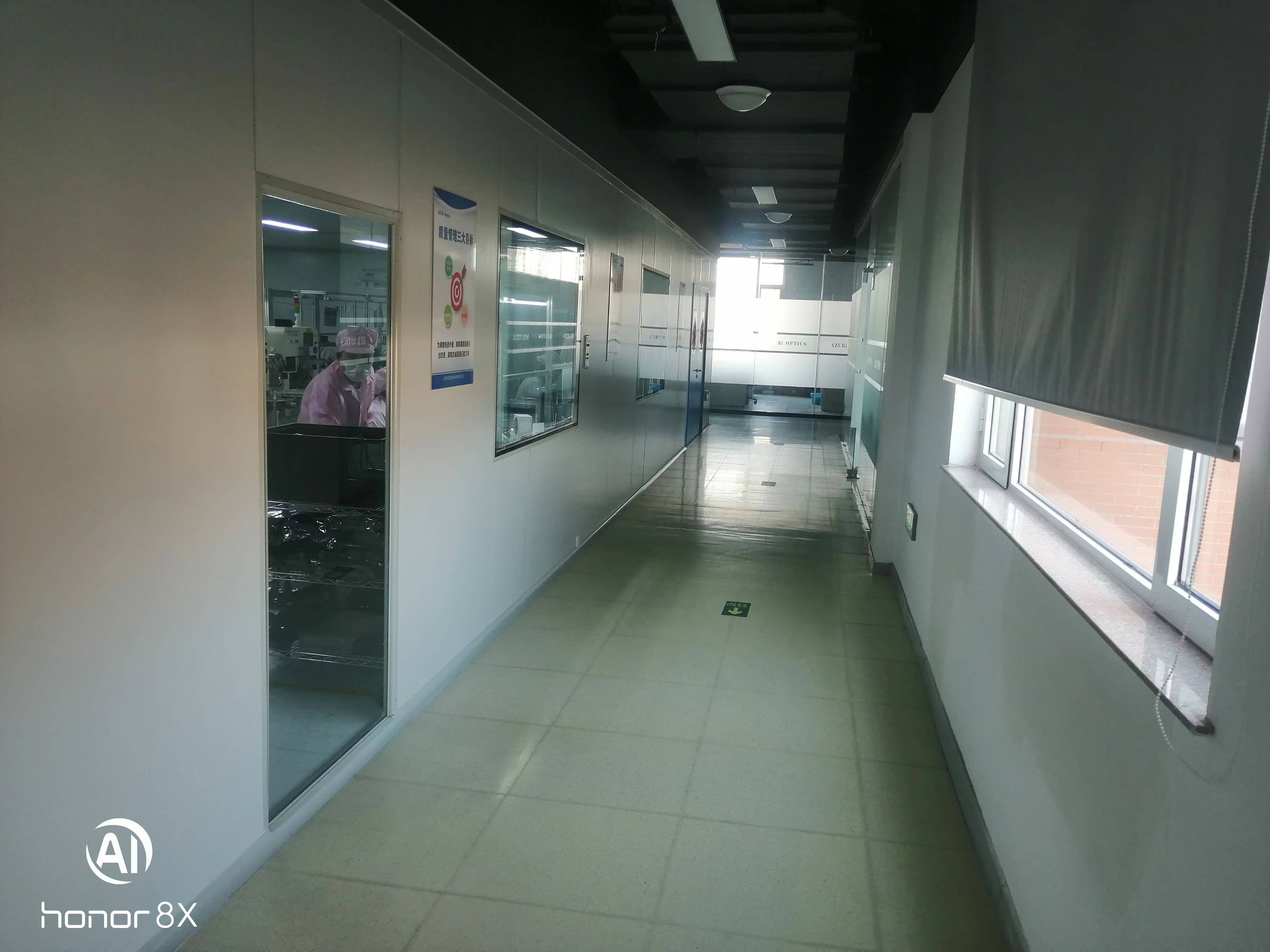
Consolidated analyzers and controllers are built and tested as one unit — which is also how they fail: as one unit.
A seven-step comparison method you can reuse
Apply the same seven steps to every candidate configuration, including mixed ones, and record the answers in one document. The method produces a defensible choice without requiring a preference for either architecture.
- Lock the parameter list and the purpose of each parameter. Mark each as control, compliance or trend. Parameters that drive control should be justified individually before they are grouped.
- Mark which parameters share a sample point. Only co-located parameters can be consolidated. Parameters drawn from different streams belong on different instruments regardless of what the catalogue offers.
- Count the physical and signal paths. Sensors, transmitters, power feeds, analog loops, digital nodes, protocol stacks. This number, not the sensor count, drives panel cost and commissioning time.
- Build the annual maintenance workload. Calibration events, cleaning frequency in the real water matrix, consumables, handling time and travel. Compare total hours per year, not maintenance philosophy.
- Draw the data architecture. Where data originates, how it is carried, what reads it, and what happens when the link fails. Confirm the redundancy path explicitly.
- Model the growth step. Add the parameters expected in phases two and three, and record what each addition costs in hardware and panel work in both architectures.
- Run a side-by-side trial on the same water. Install the shortlisted single-parameter and multi-parameter options at one point, run them over the same period, and compare drift, fouling behaviour and operator effort. Sampling is the only stage where the two architectures meet on identical conditions.
Where each architecture tends to fit
The following configurations are illustrative examples of the decision logic, not references to specific installed projects.
Multi-parameter fit — wastewater plant outlet or receiving river station. When pH, dissolved oxygen, conductivity and turbidity must be read together for reporting and process control, a consolidated online multi-parameter sensor or 6-in-1 analyzer reduces probe count, panel space and maintenance visits. KACISE describes its 5-in-1 multi-parameter design as offering lower system cost and reduced maintenance compared with single-probe alternatives, positioned for wastewater plants and rivers. Buyers should treat that as a design intent to be verified in a trial, not as a measured result for their site.
Single-parameter fit — one regulated parameter driving one control action. A distribution point where a disinfection parameter governs dosing, or a loop where pH governs neutralisation, is better served by a dedicated sensor with a direct, simple signal path. Isolation is a feature here: a fault cannot propagate to unrelated channels, and the instrument can be swapped without re-validating the rest of the station.
Multi-parameter fit — remote solar-powered monitoring stations. Low power consumption and solar compatibility matter more than consolidation itself when the site has no mains supply. A consolidated low-power unit, or a wireless water quality monitoring system with sleep mode and solar compatibility, reduces the load budget that governs battery and panel sizing.
Hybrid fit — consolidated core plus a dedicated critical loop. Many plants end up here. A multi-parameter analyzer covers the reporting envelope, while one dedicated sensor protects the control action that cannot tolerate a shared failure point. This is a legitimate outcome of the method, not a compromise.
Portable fit — verification and survey routes. A handheld multiparameter water quality sensor covers a route across several ponds or tanks; a portable optical dissolved oxygen meter covers the specific duty of verifying an installed DO channel. Portable selection should follow the verification plan, not the online parameter list.
Side-by-side comparison table
| Comparison dimension | Dedicated single-parameter architecture | Consolidated multi-parameter architecture | What to record during evaluation |
|---|---|---|---|
| Parameter coverage and cross-interference | One measurement per instrument; isolation from other parameters | Several parameters per probe or analyzer; shared sample path | Which parameters sit in one probe body; how interference and fouling are handled |
| Controller and IoT integration | One transmitter per parameter, or one channel of a shared controller | One controller, one protocol stack, one configuration point | Analog loops, RS-485/Modbus nodes, SCADA/PLC/IoT compatibility, redundancy path |
| Calibration and maintenance | More probes and more calibration events; each simple and independently replaceable | Fewer probes and fewer visits; shared failure point and more complex service | Events per year, handling time, cleaning method, detachable probe, wetted materials |
| Cabinet and remote-site footprint | More DIN rail, gland entries, power supplies and load | One housing, fewer terminations, lower power draw | Available panel space, power budget, solar compatibility for remote stations |
| Portable versus online duty | Single-purpose portables such as a portable optical DO meter | Handheld multiparameter unit covering several parameters in one case | Whether the duty is continuous control or periodic verification |
| Scaling to new parameters | Linear: add a sensor and a channel | Stepwise: use spare capacity or add a controller | Parameters expected in later phases; spare channel capacity of the chosen controller |
What this comparison cannot settle
Architecture comparison does not replace technical qualification. Measurement range, accuracy, resolution, response time, detection limit, calibration interval, temperature compensation, ingress protection and warranty are product-specific values that must come from the current datasheet of the exact model under consideration. No portfolio list, including KACISE's, is evidence of those values for a given parameter in a given water matrix.
Compliance follows the same rule. KACISE reports ISO 9001:2015 certification held since 2016 and CE/RoHS compliance as company-level claims; the certificate scope, issuing body, validity dates and product-level declarations still need to be requested and checked against the destination market. Company-level certification does not establish product-level approval for a specific application such as drinking water contact.
Commercial terms also need to be obtained rather than inferred. Public, verified benchmarks for unit price, minimum order quantity and lead time in these sensor families are not available in the reference material behind this guide, so delivery commitments should be requested in writing for each stock-keeping unit. KACISE's reported 40,000 m² production facility and 120,000-unit annual capacity, together with a 70% export share concentrated on EU and USA markets, describe capacity and market orientation — not a delivery promise for any individual order.
Where KACISE fits as a supply option
Xi'an Kacise Optronics Tech Co., Ltd. is a water quality sensor manufacturer based in Xi'an, Shaanxi, China, with a portfolio covering water quality sensors and monitoring systems for aquaculture, wastewater and smart water management, alongside level, pressure, gas and flow instrumentation. The relevant detail for this comparison is that both architectures are available from one source: dedicated instruments and consolidated multi-parameter units, with RS-485 and Modbus digital output and stated compatibility with SCADA, PLC and IoT platforms. Buyers comparing single-parameter against multi-parameter configurations can therefore run the seven-step method on one portfolio instead of reconciling two vendors' documentation — and can request a side-by-side trial of both options on the same water before committing.
Controller capacity and channel count are fixed at build time — which is why spare capacity belongs in the purchase decision, not in the retrofit budget.
Frequently asked questions
Do single-parameter and multi-parameter sensors carry the same compliance coverage?
No, and the assumption should not be made in either direction. Compliance attaches to the specific product, its scope and the market where it will be installed, not to the architecture. KACISE reports ISO 9001:2015 certification since 2016 and CE/RoHS compliance at company level, and states that its portfolio covers water quality sensors and monitoring systems for aquaculture, wastewater and smart water management; those claims describe the quality system and general conformity position, not a product-by-product approval. Buyers should request certificate scope, the declaration of conformity for the exact model, and confirmation of the destination market's own requirements before the instrument is specified into a regulated monitoring point.
Can a multi-parameter sensor replace four separate analyzers without losing a parameter?
Only within the parameter set that the consolidated unit actually measures. KACISE lists its KWS-800 Series online multi-parameter water quality sensors as measuring pH, conductivity, dissolved oxygen and turbidity, and describes an integrated 5-in-1 multi-parameter design; other parameters such as COD, TOC and organic matter, ORP, fluorescence dissolved oxygen and oil-in-water detection appear as separate product families in the same portfolio. A buyer should therefore list the required parameters first and then check which of them are consolidated in one probe body and which remain separate probes sharing only a controller. Anything outside the consolidated set is not replaced, it is simply co-housed.
Which architecture is cheaper to own over the life of the station?
The comparison depends on how many parameters the station measures and how they are maintained. KACISE states that its 5-in-1 multi-parameter water quality sensor offers lower system cost and reduced maintenance compared with single-probe alternatives, and positions it for wastewater plants and rivers; the underlying logic is fewer probes, fewer visits and one controller instead of several. That logic weakens as the parameter count falls. A station measuring a single regulated parameter with an existing transmitter channel gains little from consolidation and pays for capacity it will not use. The workable approach is to cost the annual maintenance hours and the panel content for both configurations at the actual parameter count, then re-run the comparison at the parameter count expected in three years.
How should we validate the choice before committing to a fleet?
Run both architectures on the same water at one representative point, over the same period, and compare drift, fouling behaviour, calibration effort and data continuity rather than catalogue specifications. Request sample units or a trial loan for the shortlisted configurations, ask for the calibration documentation that ships with each unit, and confirm spare probe and consumable availability at the same time. For KACISE, sample and trial requests can be raised directly with the sales team at sales@kacise.com or by phone and WhatsApp on +86 180-6671-9659, quoting the parameter list and the installation environment so that the trial is configured for the actual duty rather than a generic demonstration.
What lead time should be planned for either architecture?
No verified public lead-time benchmark exists for these sensor families in the reference material behind this guide, so a written, per-model commitment should be requested rather than inferred from capacity figures. Useful context: KACISE reports a 40,000 m² production facility with an annual capacity of 120,000 units and a 70% export share concentrated on EU and USA markets, which describes manufacturing scale and market orientation but not a delivery date for any specific order. Consolidation can add a factor that single-parameter purchases do not have, because a multi-parameter controller is configured and tested as one assembly; the trial in the previous answer is the right moment to confirm the lead time for the exact configuration, including spare probes.
Conclusion
Single-parameter and multi-parameter water quality sensors are not competitors for the same specification slot. They answer different questions. A dedicated online residual chlorine sensor, turbidity sensor, digital pH sensor or dissolved oxygen sensor answers “what is this one parameter doing, and can I act on it without depending on anything else?” A consolidated online multi-parameter sensor, 6-in-1 analyzer, multi-parameter controller or monitoring system answers “how do I measure this group of parameters at one point with one panel, one maintenance routine and one data path?”
The repeatable way to decide is to fix the parameter list and its purposes, count the physical and signal paths, cost the annual maintenance hours, draw the data architecture with its redundancy path, and record what the next three parameters will cost in each design. Then verify the shortlist on the actual water. Applied in that order, the comparison produces a defensible architecture decision that survives commissioning — rather than a specification that has to be re-engineered once the panel is built.
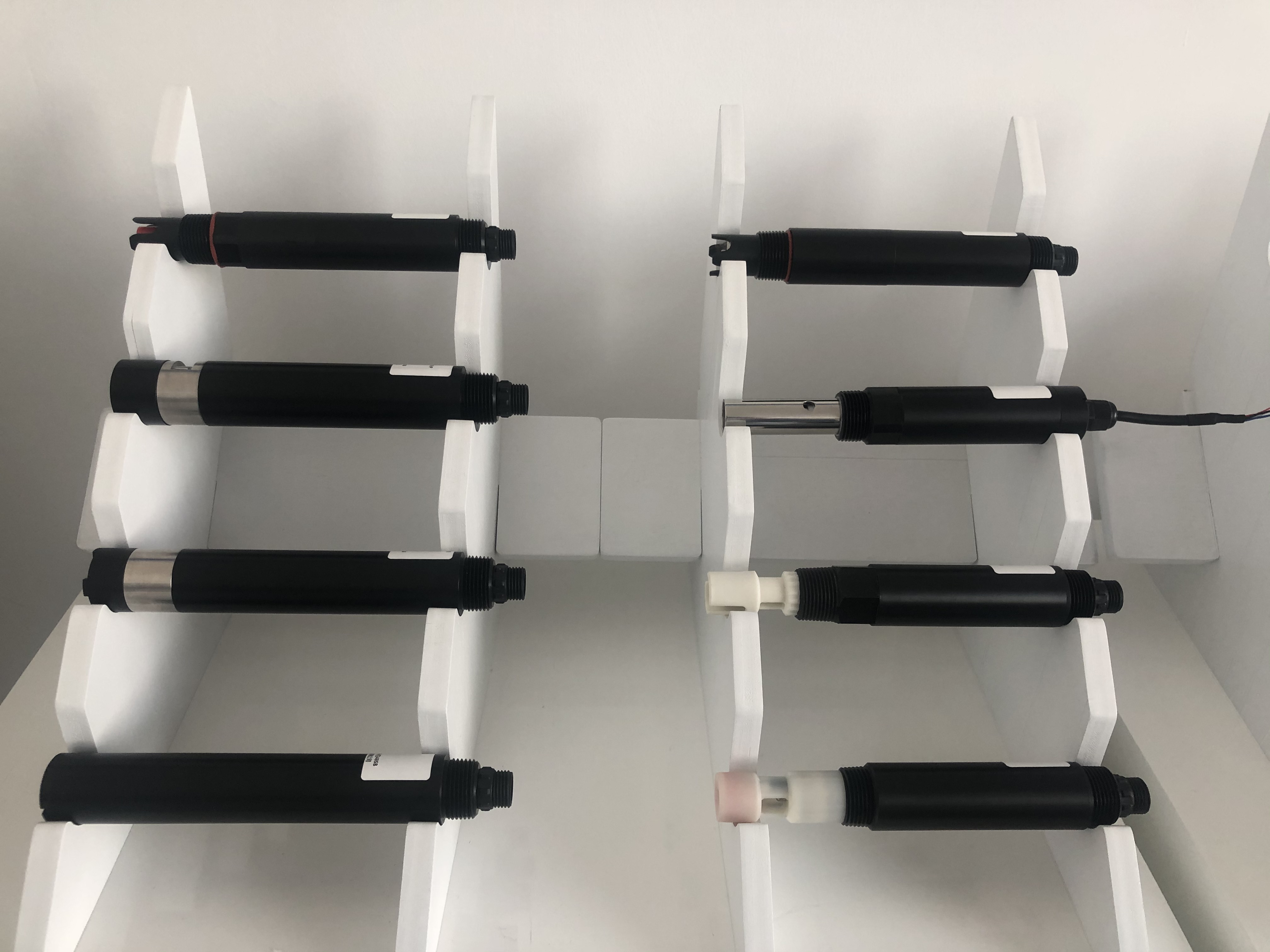
Comparing both architectures on one parameter list is faster than reconciling two vendors' documentation. Sample and configuration requests: sales@kacise.com.
Have Questions or Need More Details?
Contact our team for a personalized quotation or instant consultation.
Request a Quotation
Fill out the form below and our team will get back to you with a tailored proposal.
WhatsApp Direct Chat
Prefer to chat in real-time? Message us on WhatsApp for instant assistance & quick answers.
- Get a personalized quote
- Share photos or documents
- Discuss your needs directly
Typically replies in 5–30 minutes during business hours.