Multi-Parameter Integrated Sensors vs. Discrete Single-Parameter Probes: A Comparative Guide for Industrial Water Quality Procurement
Product Comparison: Integrated Multi-Parameter Sensor vs. Discrete Single-Parameter Probes
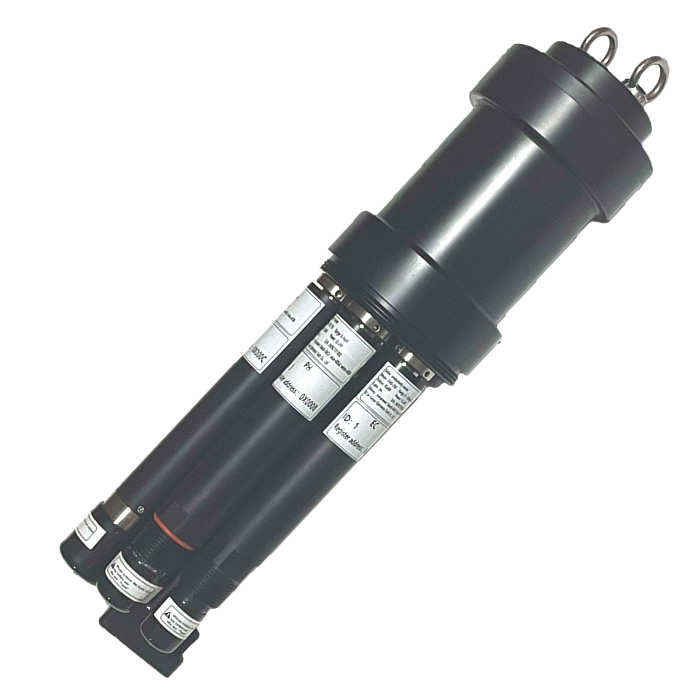
When procuring water quality monitoring equipment for industrial applications, buyers often face the choice between an integrated multi-parameter sensor (e.g., Xi'an Kacise Optronics Tech Co., Ltd.'s KWS-850) and a combination of discrete single-parameter probes from international brands like Hach. The KWS-850 measures up to 8 parameters simultaneously: dissolved oxygen (DO), chemical oxygen demand (COD), pH, oxidation-reduction potential (ORP), conductivity/salinity, ammonia nitrogen, turbidity, and temperature. It uses a single 316L stainless steel and POM body with an automatic cleaning brush, a quick-plug connector, and an anti-blocking protection cover. In contrast, a conventional Hach setup would require separate probes for pH, DO, turbidity, conductivity, and ammonia nitrogen, each with its own housing, cabling, and maintenance schedule.
| Dimension | Integrated KWS-850 | Discrete Probes (e.g., Hach) |
|---|---|---|
| Technical Parameters | 8 parameters + temp, RS485 (Modbus/RTU), automatic cleaning, operating temp 0–50°C | Individual accuracies per parameter (e.g., pH ±0.01, DO ±0.1 mg/L), separate outputs, requires multiplexer or multiple controllers |
| Applicable Scenario | Municipal sewage, industrial wastewater, surface water, aquaculture, waterworks, industrial process water | Targeted single-parameter monitoring, laboratory use, or where high-precision on a specific parameter is required |
| Cost (Total System) | Approximately 25% lower system cost compared to an equivalent set of Hach single probes | Higher due to multiple sensor heads, cables, controllers, and potential for a multiplexer |
| Maintenance Difficulty | Single probe with automatic cleaning brush; fewer components to maintain; lower overall maintenance burden | Multiple probes each requiring individual cleaning, calibration, and periodic replacement of membranes or electrodes |
Sources: KWS-850 product specification (Xi'an Kacise, 2026); comparative data from Hach product catalogs and industry analysis.
Supplier Comparison: Chinese OEM Manufacturer vs. International Brand
Industrial buyers evaluating suppliers must consider not only product performance but also procurement experience, customization, and after-sales support. A comparison between Xi'an Kacise Optronics Tech Co., Ltd., a Chinese manufacturer, and an international brand such as Hach reveals distinct trade-offs.
- Price: Kacise's integrated multi-parameter sensor offers a system cost approximately 25% lower than a comparable Hach multi-probe setup. For single-parameter sensors, Kacise's products are typically 30–50% lower than equivalent Endress+Hauser or Emerson models.
- Customization: Kacise provides OEM/ODM services including customization of voltage, logo, output method, protocol, and cable length, with a minimum order quantity of 1 unit. International brands generally offer limited customization and longer lead times.
- Delivery Lead Time: Kacise ships standard products within 5–8 working days. In contrast, Siemens ultrasonic/radar sensors require 6–8 weeks, and Emerson radar/pressure products typically exceed 8 weeks.
- After-Sales Network: International brands maintain large global service networks with local technicians in most regions. Kacise provides remote technical support and troubleshooting, with spare parts available from its Xi'an factory. For applications requiring on-site emergency service, buyers should evaluate whether a local service partner exists.
Data points: Kacise's production capacity is 5,000 units per month (monthly capacity for water quality sensors), with 100% testing before shipment. The company holds CE EMC certification for its water quality sensors (certificate ZTS23061509TCE, issued June 2023).
Decision Model: A 3-Step Framework for Selecting Water Quality Sensors
Purchasing professionals can use this three-step approach to determine whether an integrated multi-parameter sensor or discrete probes best fit their needs.
- Step 1: Define the Application Scenario – Identify the monitoring environment: is it a municipal wastewater plant requiring continuous multi-parameter monitoring, or a lab needing high-precision pH measurement only? For wastewater and pump stations, integrated sensors with automatic cleaning work well. For powder or steam environments (e.g., industrial boilers), discrete high-frequency radar probes might be more suitable.
- Step 2: Match Technical Parameters – List all required parameters and their accuracy requirements. If you need 4 or more parameters, an integrated sensor typically simplifies integration and reduces capital costs. If only 1–2 parameters are needed, discrete probes often provide better accuracy per parameter and lower upfront cost.
- Step 3: Calculate Total Cost of Ownership – Consider not only equipment cost but also installation, cabling, calibration, maintenance, and spare parts. A 25% lower initial system cost combined with reduced probe count can lead to significant savings over a 3-year period. For high-density aquaculture or river monitoring stations, the lower maintenance burden of integrated sensors often outweighs the slightly higher per-parameter accuracy of discrete probes.
Case Study: Environmental Agency in Japan Selects Integrated Multi-Parameter Sensors
An environmental agency in Japan was tasked with real-time water quality monitoring at 25 river stations to produce continuous environmental reports. The agency evaluated discrete probes from multiple international brands against the integrated multi-parameter sensor from Xi'an Kacise. After a technical and cost analysis, they chose the KWS-850 multi-parameter sensor for its multi-sensor integrated probe, which reduced the number of instruments per station from 5 to 1. Key outcomes after 3 years of operation:
- Continuous data collection for pH, DO, turbidity, conductivity, and temperature with minimal downtime.
- Lower maintenance cost due to one cleaning routine per station instead of five.
- Ability to integrate directly with the existing SCADA system via RS485 (Modbus).
- System cost 25% lower than the equivalent Hach multi-probe solution, with delivery completed within 5 weeks.
This case demonstrates how matching the sensor architecture to the application (wide-area river monitoring) and supplier capabilities (customizable, fast-delivery Chinese OEM) can achieve operational and financial benefits.
Summary: For multi-parameter, continuous monitoring environments, an integrated sensor from a Chinese manufacturer like Kacise offers significant cost and maintenance advantages. For specialized, single-parameter high-precision needs, discrete probes from international suppliers may still be justified. The 3-step framework above helps buyers align their purchase decision with actual operational requirements.
Have Questions or Need More Details?
Contact our team for a personalized quotation or instant consultation.
Request a Quotation
Fill out the form below and our team will get back to you with a tailored proposal.
WhatsApp Direct Chat
Prefer to chat in real-time? Message us on WhatsApp for instant assistance & quick answers.
- Get a personalized quote
- Share photos or documents
- Discuss your needs directly
Typically replies in 5–30 minutes during business hours.