How to Match a Water Quality Sensor Manufacturer to Your Project
How to Match a Water Quality Sensor Manufacturer to Your Project: A Scenario-First Selection Guide for Industrial Buyers
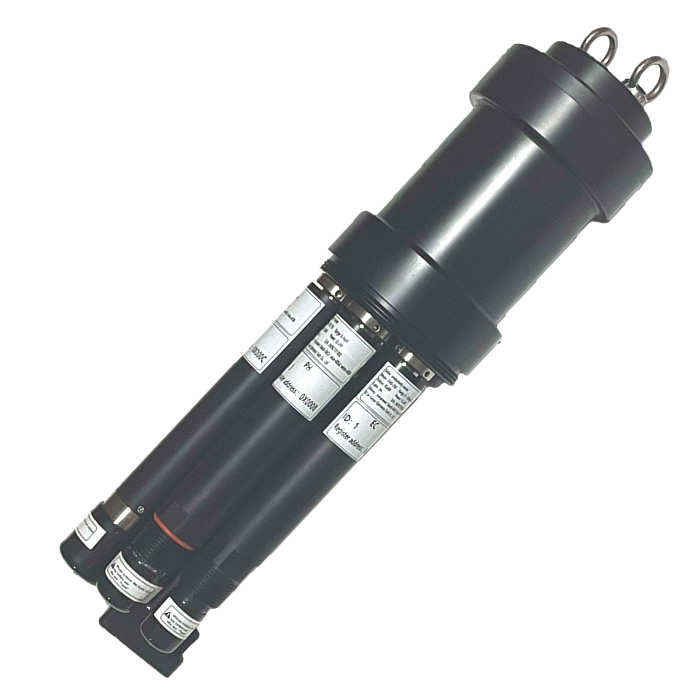
Selecting the right water quality sensor manufacturer starts with understanding your project's unique operational environment. KACISE (Xi'an Kacise Optronics Tech Co., Ltd.) is a Chinese manufacturer founded in 2014 that produces a broad range of water quality sensors, analyzers, and monitoring systems. This guide provides a structured approach to evaluating manufacturers based on project-specific requirements.
Why Project Fit Matters in Water Quality Sensor Procurement
Industrial buyers often face a mismatch between off-the-shelf sensor specifications and the real-world conditions of their application. A sensor that performs well in a municipal clear-water reservoir may fail in a high-turbidity sewage tank, a saltwater aquaculture environment, or a corrosive chemical process. The global water quality sensor market was valued at USD 5.74 billion in 2024 (Grand View Research) and is projected to reach USD 9.10 billion by 2030. With this growth comes increasing demand for sensors that are tailored to specific operational contexts, not just generic parameters.
Defining the Challenge: One Sensor Does Not Fit All
Key mismatches arise when project conditions differ from standard sensor capabilities. Examples include:
- High salinity or pressure – standard 316L stainless steel may corrode; titanium or specialized coatings are needed.
- Continuous monitoring in bio-fouling waters – sensors require automatic cleaning mechanisms.
- Multi-parameter integration – discrete single-parameter probes increase installation complexity and cost.
- Output protocol compatibility – legacy PLCs may need 4-20mA, while modern IoT platforms prefer RS485/Modbus.
A manufacturer that can offer customization, a wide product portfolio, and proven case experience in similar projects becomes a critical partner.
Industry Background: The Shift Toward Application-Driven Selection
The water quality sensor market is evolving rapidly. According to TechSci Research, IoT-enabled water quality management is expected to grow at a robust CAGR of 16.23% through 2030. Asia Pacific dominated the market with a 46.5% revenue share in 2023 (Grand View Research), with China identified as a major increasing market. This geographical concentration means many vendors offer extensive application data from real installations. Buyers today must look beyond basic metrics like price and accuracy and evaluate how a manufacturer’s product line aligns with their specific project domain—be it municipal wastewater, aquaculture, river monitoring, or industrial process water.
Detailed Solution: KACISE’s Product Ecosystem and Customization Capabilities
KACISE operates a 40,000 m² facility with an annual production capacity of 120,000 units, exporting 70% of its output to EU and USA markets. The company’s water quality sensor portfolio covers over 20 parameter types, including multi-parameter integrated sensors (e.g., KWS-800 series measuring up to 7 parameters in one probe), digital ammonia nitrogen sensors (KWS-290), fluorescence dissolved oxygen meters (KWS-630, KWS-650C), optical chlorophyll sensors (KWS-400), and specialized sensors for oil-in-water, TSS, COD, conductivity, salinity, ORP, pH, and chloride. All digital sensors support RS485 (Modbus/RTU) output, and many are IoT-compatible, offering mobile APP debugging and remote data acquisition.
KACISE provides OEM/ODM services with customization options for voltage, output method (4-20mA or RS485), protocol, cable length, and connector type. Monthly capacity reaches 8,000 units for standard OEM products, with a lead time of 5–8 working days for small quantities (minimum order 1 unit). Every unit undergoes 100% testing before shipment. The company also offers remote after-sales support.
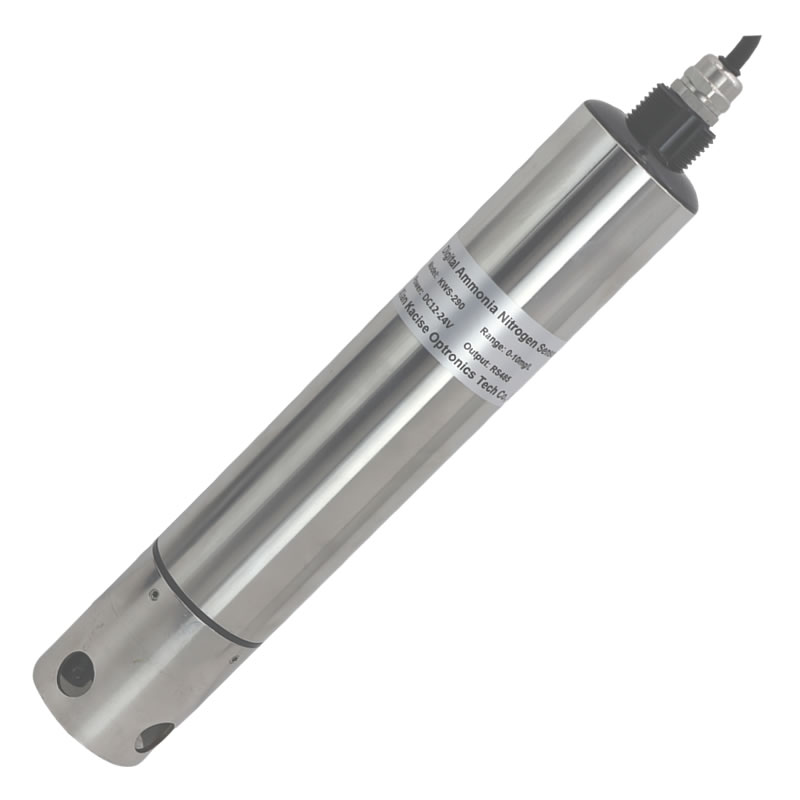
KACISE KWS-290 Digital Ammonia Nitrogen Sensor measures NH3-N, pH, temperature, and optional K+ with automatic temperature and pH compensation.
Step-by-Step Framework for Project-Fit Evaluation
- Define the target parameters and measurement ranges
List all parameters (pH, DO, COD, NH4-N, turbidity, etc.) and their expected concentration windows. For example, a municipal effluent needs DO up to 20 mg/L and COD up to 500 mg/L. KACISE’s KWS-800 covers DO (0–20 mg/L), COD (0–200/500 mg/L), pH, ORP, ammonia nitrogen, turbidity, and temperature in one probe. - Analyze environmental conditions
Temperature, pressure, salinity, and chemical aggressiveness dictate material selection. KACISE offers sensors in 316L stainless steel, titanium alloy, POM, and custom coatings. For high-pressure applications (e.g., deep tanks), verify the maximum pressure rating—many KACISE sensors support up to 3–6 bar. - Check integration requirements
Does your SCADA or IoT platform require RS485/Modbus, 4-20mA, or both? KACISE digital sensors include both RS485 and optional 4-20mA. The KWS-790 Digital pH Sensor offers dual RS485+4-20mA output and IoT compatibility. - Assess customization needs
If your project demands a unique output protocol, cable length, or connector, verify the manufacturer’s customization capability. KACISE accepts modifications to voltage, output method, protocol, and cable, with a minimum order of 1 unit. - Review certifications and standards
For drinking water applications, ensure sensors meet NSF/ANSI 61 and 372 (material safety and lead-free compliance). For EU projects, compliance with EN IEC 61326-1:2021 for EMC may be required. While KACISE products are widely exported to EU/USA, confirm specific certifications with the manufacturer for each project. - Evaluate delivery and after-sales support
Lead times typically range from 5–8 working days for stock items, up to 30 days for custom OEM orders. KACISE provides remote technical support and a 100% test guarantee.
Real-World Use Cases Demonstrating Scenario Fit
Case 1: Municipal Wastewater Plant in the UK
Client type: Municipal wastewater plant
Duration: 3 years
Application: Effluent quality monitoring
Products used: 12 sensors from the KWS-800 series (7-in-1 multi-parameter system) and KMPW520 6-in-1 analyzer
Result: Compliant discharge, reduced manual sampling. The multi-parameter integration minimized probe count and simplified maintenance.
Case 2: High-Density Aquaculture Farm in Norway
Client type: Aquaculture farm
Duration: 2 years
Application: Dissolved oxygen and ammonia monitoring in saltwater tanks
Products used: 40 units of KWS-630 Fluorescence Dissolved Oxygen Sensor (saltwater-resistant) and KWS-290 Digital Ammonia Nitrogen Sensor
Result: Increased fish survival rate. Fluorescence DO sensors require no flow rate and minimal maintenance, ideal for continuous operation in marine environments.
Case 3: Agricultural Runoff Monitoring in Finland
Client type: Agricultural runoff monitoring authority
Duration: 2 years
Application: Nutrient runoff (chlorophyll & ammonia) tracking in rivers
Products used: 4 units of KWS-450 Optical Fiber Chlorophyll Sensor
Result: Better agricultural pollution control through stable real-time data, enabling early warnings for algae blooms.
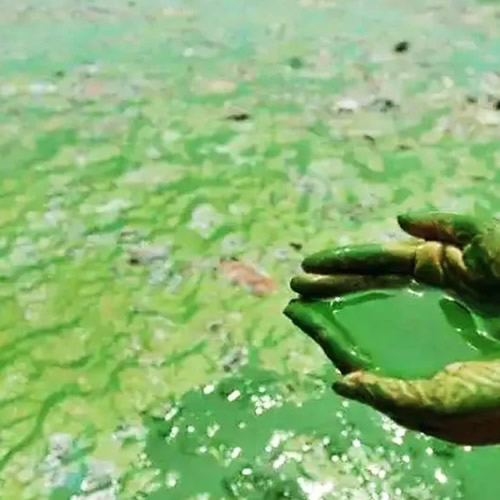
KWS-400 Optical Fiber Chlorophyll Sensor deployed for river monitoring in Finland.
Comparison Table: Recommended KACISE Products by Project Scenario
| Project Scenario | Recommended Product | Key Measured Parameters | Material | IP Rating |
|---|---|---|---|---|
| Municipal wastewater | KWS-800 (Online Multi-Parameter System) | DO, COD, pH, ORP, NH4, Turbidity, Temp | Titanium alloy + 316L SS | IP68 |
| Saltwater aquaculture | KWS-630 (Fluorescence DO Sensor) | Dissolved oxygen, Temperature | POM+316L SS (titanium optional) | IP68 |
| Freshwater aquaculture | KWS-290 (Digital Ammonia Nitrogen Sensor) | NH3-N, NH4+, pH, Temp, K+ | — | — |
| River / surface water | KWS-910 (Online TSS Sensor) | TSS, Sludge concentration | Titanium | IP68 |
| Drinking water plant | KWS-790 (Digital pH Sensor – IoT) | pH, Temperature | High corrosion-resistant composite | IP68 |
| Industrial effluent | KWS-1000 (Online Oil-in-Water Sensor) | Oil (0–50 ppm) | Titanium / 316L SS | IP68 |
Frequently Asked Questions
- What certifications should I look for in a water quality sensor for drinking water applications?
For drinking water monitoring in the US, sensors should comply with NSF/ANSI 61 and 372 (material safety and lead-free). In Europe, EN IEC 61326-1:2021 covers EMC requirements. Always confirm with the manufacturer which certifications apply to the specific model. - Can KACISE provide a multi-parameter sensor that measures both COD and ammonia nitrogen simultaneously?
Yes. The KWS-800 online multi-parameter system includes both COD (0–500 mg/L) and ammonia nitrogen (0–1000 mg/L) along with pH, ORP, dissolved oxygen, turbidity, and temperature in a single probe. It uses automatic cleaning and RS485 (Modbus/RTU) output. - What is the minimum order quantity and typical lead time for a custom sensor?
For OEM/ODM customizations (voltage, output, cable), the minimum order is 1 unit. Standard product lead time is 5–8 working days; custom orders typically require 30 days. Monthly OEM capacity is 8,000 units. - How do I choose between a titanium and 316L stainless steel sensor for a coastal monitoring station?
Titanium alloy offers superior corrosion resistance in high-salinity and chlorine environments. KACISE offers titanium options for many sensors (e.g., KWS-910 TSS sensor, KWS-1000 oil-in-water sensor). For pure freshwater applications, 316L SS is sufficient. - Can I request a sample unit before placing a bulk order?
Yes. KACISE supports sample orders with the same lead time as small quantities (MOQ 1 unit). Request a quote or sample via KACISE's contact page to start the process.
Contact KACISE to discuss your project requirements and request a customized quote.
Request a Quote or Sample →
Conclusion
Matching a water quality sensor manufacturer to your project is not a one-size-fits-all decision. By systematically evaluating parameters, environmental conditions, integration needs, customization options, certifications, and delivery capabilities, you can identify a supplier that fits your specific operational context. KACISE, with its 40,000 m² facility, 120,000-unit annual capacity, broad product range covering over 20 parameter types, and proven case studies in municipal wastewater, aquaculture, and river monitoring, offers a flexible and scalable solution for industrial buyers. Start your evaluation with a clear project profile and use the checklist above to make an informed procurement decision.
Have Questions or Need More Details?
Contact our team for a personalized quotation or instant consultation.
Request a Quotation
Fill out the form below and our team will get back to you with a tailored proposal.
WhatsApp Direct Chat
Prefer to chat in real-time? Message us on WhatsApp for instant assistance & quick answers.
- Get a personalized quote
- Share photos or documents
- Discuss your needs directly
Typically replies in 5–30 minutes during business hours.