Ammonia Nitrogen Spikes in Industrial Effluent: A Sensor-Based Troubleshooting Guide
An ammonia nitrogen spike is one of the few water quality events that can move an industrial plant from routine operation to urgent troubleshooting within a single shift. The reading rises, the alarm triggers, and the engineer on duty faces a short list of decisions: Is the measurement real? Where did the ammonia come from? What needs to be monitored while the source is being isolated and corrected?
This article follows that scenario. It is written for plant engineers, environmental officers, and procurement teams who need to respond to an ammonia nitrogen event in industrial effluent using online instrumentation. The focus is on the sensor set that makes the response possible: online ammonia nitrogen sensors (including NH4-N and digital models), supporting measurements such as online nitrate, nitrite, and COD sensors, and the multi-parameter water quality controller or monitoring system that ties the readings together.
It also addresses a question that becomes relevant after the immediate event is resolved: what does it take to keep this monitoring capability in place over the long term? That question connects the troubleshooting workflow to the choice of a water quality sensor manufacturer — not just for the initial purchase, but for supply continuity, maintenance, and system integration over the life of the plant.
What an Ammonia Nitrogen Spike Means in Industrial Effluent
Ammonia nitrogen refers to the nitrogen present in water in the form of ammonia (NH3) and ammonium (NH4+). In industrial effluent, it is a regulated parameter because of its effect on receiving waters and on biological treatment processes. When the concentration rises quickly and unexpectedly, the event is described as a spike.
A spike matters for three practical reasons.
Discharge compliance. Ammonia nitrogen is controlled under industrial discharge permits. A rise above the permitted limit can trigger reporting obligations, penalties, or restrictions on discharge. The sooner the event is detected and verified, the more options the plant has.
Treatment disruption. In activated sludge and other biological systems, ammonia nitrogen is oxidized by nitrifying bacteria. A sudden increase in ammonia load — especially alongside shifts in pH, temperature, or dissolved oxygen — can slow or inhibit nitrification. That can lead to a secondary problem: ammonia passes through the treatment process and appears in the final effluent.
Measurement uncertainty. The first question after a spike is often whether the reading is real. Sensor fouling, calibration drift, and electrical interference can all produce readings that do not reflect the actual effluent. Confirming the event with a second measurement principle or a related parameter is part of the response.
Why Ammonia Nitrogen Monitoring Is Drawing More Investment
The shift toward continuous online monitoring is part of a broader market movement. According to Grand View Research, the global water quality sensor market was valued at USD 5.74 billion in 2024 and is projected to reach USD 9.10 billion by 2030, growing at a CAGR of 8.1%. Asia Pacific dominated the market with a revenue share of 46.5% in 2023, with China identified as a major increasing market.
A related figure: the global water quality monitoring systems market reached USD 5.8 billion in 2024, with sensors accounting for the largest segment at a 45% share, according to Grand View Research (via WaterTech). IoT-enabled water quality management is expected to grow at a CAGR of 16.23% through 2030, according to TechSci Research.
For the plant engineer, the practical implication is straightforward. Continuous monitoring is no longer limited to large municipal facilities. Industrial sites are adopting online sensors because grab sampling cannot capture events that develop over hours or minutes. An ammonia nitrogen spike is exactly that kind of event.
The Sensor Toolkit for Ammonia Nitrogen Event Investigation
Xi'an Kacise Optronics Tech Co., Ltd. (KACISE), founded in 2014, is a water quality sensor manufacturer based in Xi'an, China. The company operates a 40,000 m² facility and produces a portfolio that covers water quality monitoring, industrial automation, environmental monitoring, and process control applications. KACISE exports 70% of production to EU and USA markets.
For an ammonia nitrogen event, the relevant toolkit is not a single instrument. It is a combination of sensors that answer different questions about the same event.
Online Ammonia Nitrogen Sensors (NH4-N and Digital Models)
Online ammonia nitrogen sensors provide continuous measurement of ammonia nitrogen in the effluent stream. NH4-N sensors target the ammonium form specifically. Digital models output readings in a format that can be logged, trended, and integrated into a control system.
In an event, these sensors establish the timeline. They show when the rise began, how high it went, and whether the concentration is still climbing or has started to fall. That timeline is the starting point for every subsequent decision.
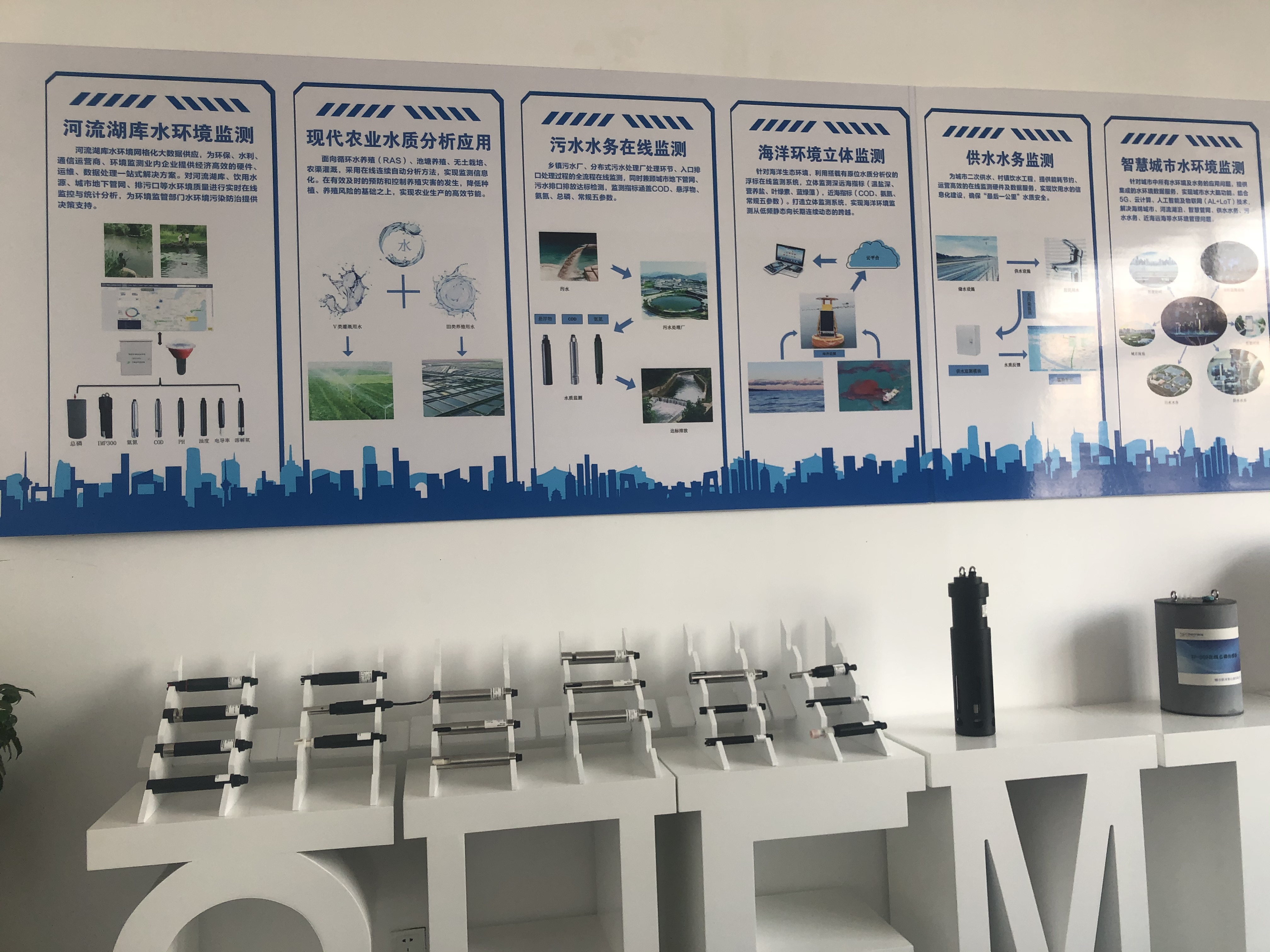
KACISE's water quality monitoring portfolio is built around this type of continuous measurement. The company's online multi-parameter water quality sensors — including the KWS-800 Series, which measures up to seven parameters such as pH, conductivity, dissolved oxygen, and turbidity in a single digital probe — are designed for real-time monitoring in wastewater, environmental, and industrial applications. Extending the same monitoring architecture to the nitrogen cycle requires parameter-specific measurements, including ammonia nitrogen (NH4-N) and related nitrogen compounds, which can be integrated into the same monitoring system.
Nitrate, Nitrite, and COD Sensors as Cross-Check Tools
Ammonia nitrogen does not exist in isolation. It is part of a nitrogen cycle that includes nitrite (NO2-) and nitrate (NO3-). When nitrification is working, ammonia is converted to nitrite and then to nitrate. When it is not, ammonia accumulates while nitrite and nitrate behave differently.
Online nitrate and nitrite sensors help the engineer interpret which part of the cycle is failing. A spike in ammonia with a simultaneous drop in nitrate suggests that nitrification has been interrupted. A spike in ammonia with a rise in nitrite suggests a partial conversion. Neither pattern is visible from ammonia alone.
COD sensors add a second dimension. Chemical oxygen demand indicates the organic load in the effluent. If an ammonia spike is accompanied by a COD spike, the source is more likely to be a new discharge or an upstream process change. If ammonia rises while COD remains stable, the cause is more likely to be biological — for example, a loss of nitrifying activity.
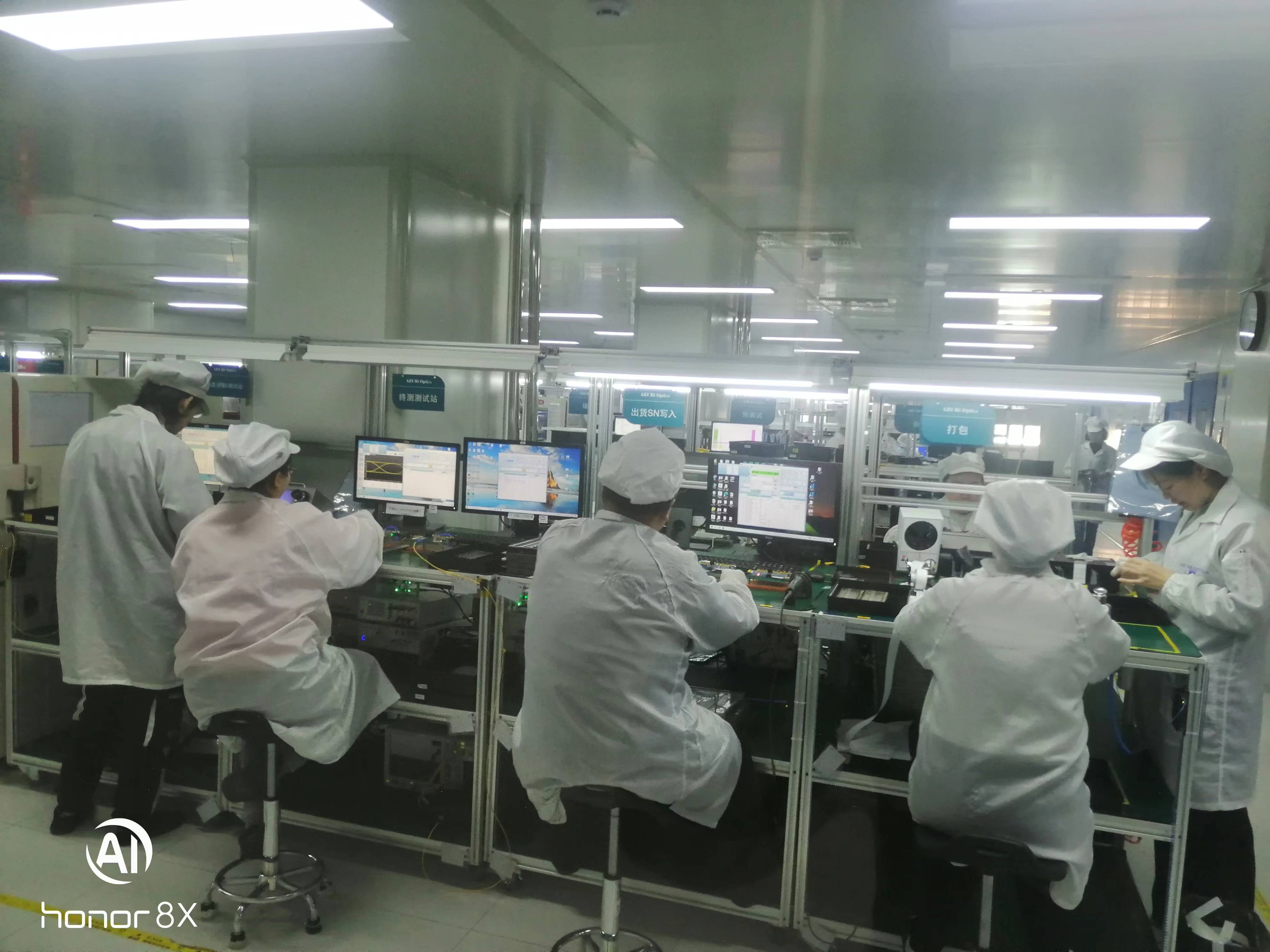
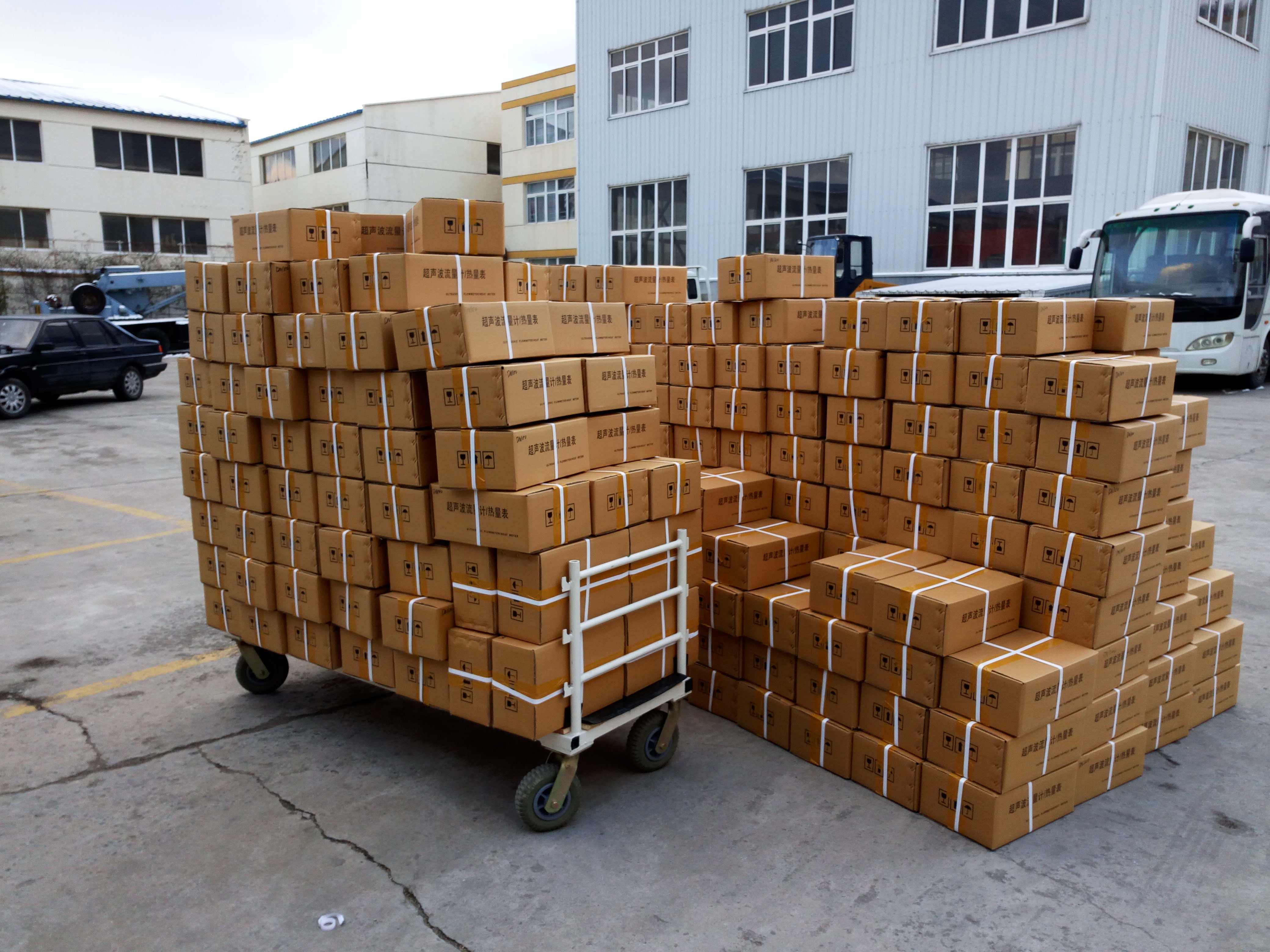
Water quality sensors undergo pre-shipment testing and video recording as part of KACISE's acceptance criteria. Source: KACISE.
The Multi-Parameter Controller as the Integration Layer
Readings from individual sensors become useful when they are combined. A multi-parameter water quality controller or monitoring system collects data from connected sensors, applies a common time base, and presents the results in a form that supports decisions.
KACISE's multi-parameter approach is built around digital integration. The company's sensors support RS-485 and Modbus outputs, which allow data to be transmitted to SCADA, PLC, and IoT platforms. This matters during an event because the response depends on comparing parameters that may be measured at different points in the process.
The controller also affects long-term operation. Automatic cleaning functions and low-maintenance design reduce the manual work required to keep sensors reliable. That is a practical concern in effluent monitoring, where fouling is a recurring risk.
Step-by-Step: From Spike Detection to Root Cause Isolation
The following sequence reflects how a plant team might work through an ammonia nitrogen spike using online instrumentation. It assumes that online ammonia nitrogen, nitrate, nitrite, and COD sensors are already installed, and that a multi-parameter controller is aggregating the data.
Step 1: Confirm the Reading Is Real
The first check is against measurement error. Sensor fouling is a common cause of drift in effluent monitoring, and it can produce false high readings. KACISE addresses this risk with self-cleaning and easy-maintenance designs, including detachable probes and smooth surface coatings. Electrical interference is another potential factor; digital filtering and shielding are used to reduce it.
If the ammonia reading can be compared with a second measurement — a different sensor, a portable analyzer, or a laboratory sample — that comparison should be made before the event is treated as confirmed.
Step 2: Establish the Timeline
Once the reading is accepted as real, the next step is to determine when the rise began. Trend data from the online ammonia nitrogen sensor provides this. The shape of the curve — steady climb, step change, or short pulse — is an early clue about the source. A step change often points to a discrete release or an upstream event. A gradual climb suggests a slower shift, such as a change in biological activity or a slow increase in load.
Step 3: Cross-Check with Related Parameters
The next step is to look at nitrate, nitrite, and COD on the same time base. In practice, the combination of these parameters helps distinguish between different failure modes:
- Ammonia up, nitrate down: nitrification interrupted
- Ammonia up, nitrite up: partial nitrification or nitrite accumulation
- Ammonia up, COD up: potential new load or upstream discharge
- Ammonia up, all other parameters stable: possible measurement issue or localized source
This cross-check is why multi-parameter monitoring is useful in event response. A single ammonia reading tells you that something changed. The surrounding parameters help explain what changed.
Step 4: Isolate the Source
With the parameter pattern established, the search moves upstream. Sources of an ammonia nitrogen spike in industrial effluent can include changes in production processes, cleaning operations, shifts in influent composition, or upset conditions in the biological treatment system itself.
Online monitoring supports this step by allowing the team to compare readings across different points in the plant. If the plant has multiple monitoring points connected to a multi-parameter controller, the location where the spike first appears can narrow the source.
Step 5: Monitor Recovery and Verify Treatment Performance
After the source has been addressed, the ammonia nitrogen reading should be monitored until it returns to baseline. During this period, the controller provides continuous data on ammonia, nitrate, nitrite, and COD, which shows whether the treatment process is recovering normally.
This step is also where the long-term value of the monitoring system becomes clear. The same sensors that detected the event are the ones that confirm the plant has returned to normal operation. The data from the event can be reviewed later to identify what changed and whether the response was effective.
Where This Troubleshooting Framework Applies
The ammonia nitrogen monitoring workflow described here is not limited to one type of facility. KACISE's water quality monitoring products are used across several application areas, and the troubleshooting logic is similar in each.
Municipal and industrial wastewater treatment. Ammonia nitrogen is a core parameter in discharge compliance. Online monitoring supports both event response and routine reporting.
Industrial process control. In manufacturing plants that discharge ammonia-bearing effluent, online monitoring helps maintain treatment performance and avoid compliance excursions.
Aquaculture. Ammonia nitrogen is a critical water quality parameter in fish and shrimp farming. The same sensor principles apply, though the operating ranges and response requirements differ.
Environmental monitoring stations. River, lake, and reservoir monitoring programs use multi-parameter sensors to track water quality over time. Ammonia nitrogen is one of the parameters included in these programs.
KACISE's portfolio covers online multi-parameter water quality sensors (KWS-800 Series), COD/TOC and organic matter sensors, ORP sensors, and fluorescence dissolved oxygen and oil-in-water detection sensors. The company's products are designed for water treatment plants, environmental monitoring stations, river and lake management, aquaculture, and industrial wastewater applications.
Integrated Multi-Parameter Monitoring vs. Discrete Probes
Buyers evaluating water quality sensor manufacturers often compare integrated multi-parameter systems with discrete single-parameter probes. The two approaches differ in parameter coverage, installation complexity, maintenance, and cost.
The table below compares the integrated multi-parameter approach represented by KACISE with a discrete single-probe configuration, drawing on the company's product specifications and available comparison data.
| Dimension | KACISE Integrated Multi-Parameter Approach | Discrete Single-Probe Configuration |
|---|---|---|
| Parameter coverage | Multi-parameter in one digital probe; KWS-800 Series measures up to 7 parameters | One parameter per probe; multiple probes required for multi-parameter monitoring |
| Typical fit | Wastewater plants, rivers, industrial effluent monitoring | Applications where a single parameter is the main concern |
| System cost | 25% lower system cost compared with an equivalent single-probe configuration | Higher total cost when multiple parameters are required |
| Maintenance | Fewer probes, lower maintenance burden | More probes, more maintenance points |
| Power | Low power, solar compatible | Varies by probe type and installation |
| Digital integration | RS-485 and Modbus output; compatible with SCADA, PLC, and IoT platforms | Depends on individual probe configuration |
For an ammonia nitrogen event, the integrated approach has a specific operational advantage: the ammonia, nitrate, nitrite, and COD readings can be viewed on the same time base without coordinating separate instruments. That comparison is what makes root cause isolation faster.
Frequently Asked Questions
What standards apply to water quality sensors used in industrial effluent monitoring?
Industrial water quality sensors are typically required to comply with EN IEC 61326-1:2021, the standard for electrical equipment for measurement, control, and laboratory use. For sensors used in drinking water applications, NSF/ANSI 61 and 372 standards address material safety and lead-free compliance. Buyers should confirm which standards apply to their specific application and request documentation during supplier qualification.
Can a multi-parameter controller integrate ammonia nitrogen with nitrate, nitrite, and COD readings?
Yes. A multi-parameter water quality controller or monitoring system can collect data from multiple sensors on a common platform. KACISE sensors support RS-485 and Modbus digital output, allowing integration with SCADA, PLC, and IoT platforms. This makes it possible to view ammonia nitrogen alongside nitrate, nitrite, COD, and other parameters on the same time base, which is essential for interpreting an event.
What long-term maintenance does an online ammonia nitrogen monitoring system require?
Sensor fouling is a recurring risk in effluent monitoring. KACISE addresses this with self-cleaning and easy-maintenance designs, including detachable probes and smooth surface coatings. Automatic cleaning functions reduce manual intervention, and low-maintenance design supports continuous operation. Routine calibration and probe inspection remain standard practice for long-term deployment.
Can buyers test a water quality sensor before committing to full deployment?
KACISE purchasing terms include a minimum order quantity of one unit, which allows buyers to evaluate a sensor before scaling up. Pre-shipment testing and video recording are included as acceptance criteria. Delivery terms include FOB, CIF, CIP, and DDP, and payment terms include T/T, Western Union, and MoneyGram.
How does a water quality sensor manufacturer support long-term supply continuity?
Long-term supply continuity depends on production capacity and delivery reliability. KACISE operates a 40,000 m² facility with a monthly production capacity of 5,000 to 8,000 units, and exports 70% of production to EU and USA markets. For plants and integrators planning multi-year monitoring programs, these are relevant indicators of whether a manufacturer can maintain supply as systems expand.
For buyers who want to evaluate a specific configuration for ammonia nitrogen monitoring, KACISE provides product documentation, samples, and quotation support through its online channels at kcsensor.com.
From Event Response to Long-Term Monitoring Ecosystem
An ammonia nitrogen spike is a moment of urgency, but the capability to respond to it is a long-term investment. The sensors that detect the event — online ammonia nitrogen, nitrate, nitrite, and COD — must remain reliable over years of operation. The controller that integrates them must remain compatible with the plant's control systems. And the manufacturer that supplies them must be able to support the installation as it grows.
This is where the choice of a water quality sensor manufacturer becomes part of the operational strategy, not just a procurement transaction. KACISE's portfolio covers the sensor types used in ammonia nitrogen event investigation, and the company's production capacity, export experience, and digital integration capabilities support long-term monitoring programs.
For plant engineers and procurement teams, the practical takeaway is to treat the monitoring system as an ecosystem. The ammonia nitrogen spike is the test. The sensors, controller, and supplier relationship are what determine how well the plant passes it.
Evaluating a water quality sensor manufacturer for your next project?
KACISE provides online water quality sensors, multi-parameter monitoring systems, and OEM/ODM support for industrial and environmental applications. Sample evaluation, technical documentation, and quotations are available on request.
Contact: www.kcsensor.com | Email: sales@kacise.com | WhatsApp: +86 180-6671-9659
Have Questions or Need More Details?
Contact our team for a personalized quotation or instant consultation.
Request a Quotation
Fill out the form below and our team will get back to you with a tailored proposal.
WhatsApp Direct Chat
Prefer to chat in real-time? Message us on WhatsApp for instant assistance & quick answers.
- Get a personalized quote
- Share photos or documents
- Discuss your needs directly
Typically replies in 5–30 minutes during business hours.