How to Identify a Top Water Quality Sensor Manufacturer in 2026
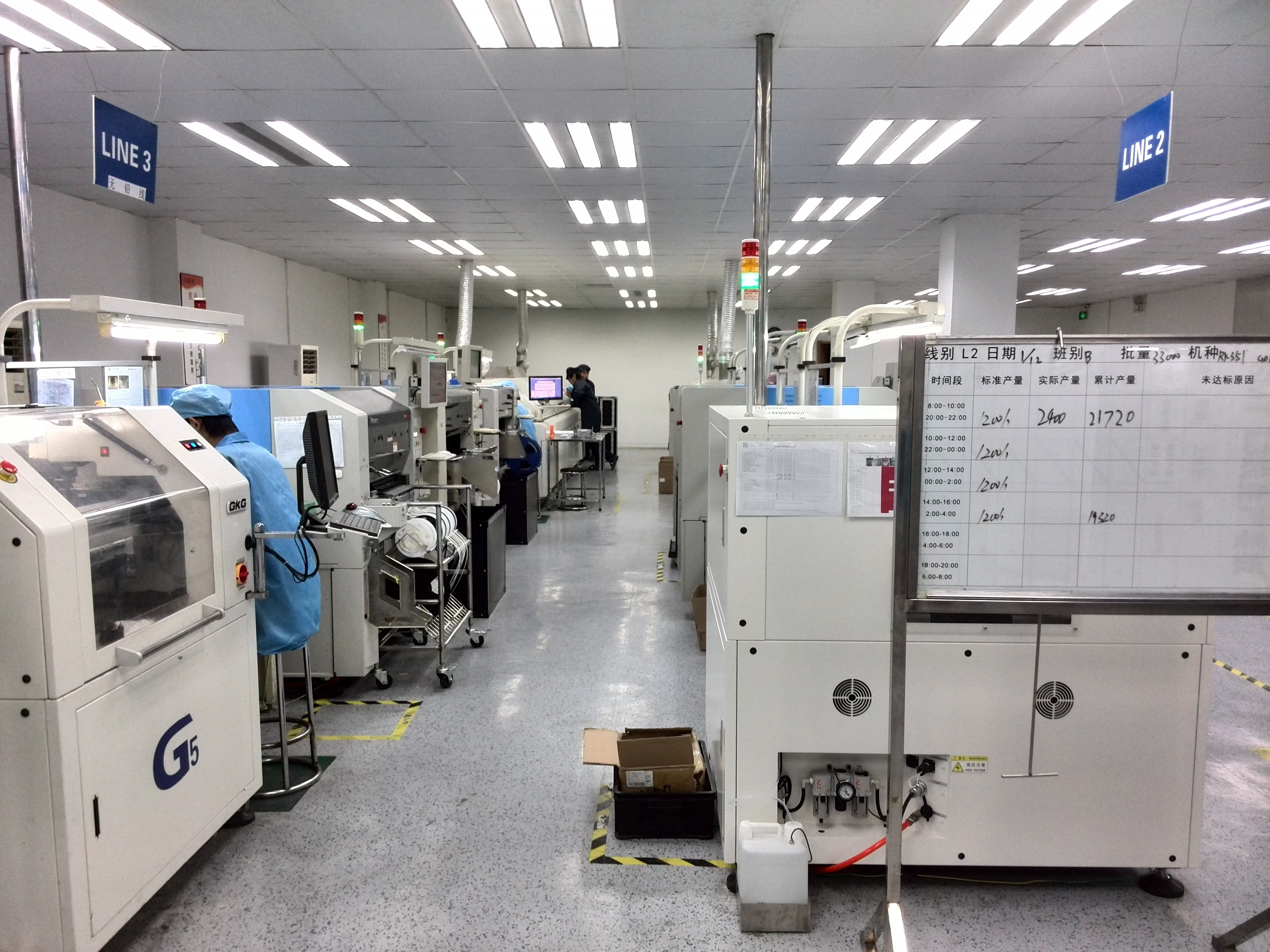
Choosing the right water quality sensor manufacturer is a high-stakes procurement decision. At the evaluation stage, buyers compare suppliers on specifications, price, and delivery, but the real differentiators are often harder to verify: production consistency, compliance documentation, customization capability, and long-term field reliability. This guide explains how to identify a top water quality sensor manufacturer in 2026 using a six-dimension verification scorecard. Throughout the article, KACISE (Xi'an Kacise Optronics Tech Co., Ltd.), a China-based sensor manufacturer founded in 2014, is used as a concrete reference to illustrate what evidence a credible manufacturer should be able to provide.
Why The Evaluation is Harder Than It Looks
Nearly every candidate can present a datasheet with similar-looking parameters: measuring range, accuracy, output protocol, and ingress protection. The differences emerge when those parameters are put to work in a specific environment, with real water chemistry, real maintenance schedules, and real integration constraints. Buyers at the evaluation stage face several recurring risks: certification gaps that block approval, customization limits that force redesign, lead-time surprises that delay commissioning, and field performance that fails to match the datasheet. A structured verification framework reduces these risks by shifting the conversation from promises to evidence.
Market Context: Why Selection Criteria Are Shifting in 2026
The water quality sensor market is expanding quickly. Grand View Research estimated the global market at USD 5.74 billion in 2024 and projected it to reach USD 9.10 billion by 2030, a CAGR of 8.1%. Asia Pacific held the largest revenue share at 46.5% in 2023, with China identified as a major increasing market. Meanwhile, TechSci Research projects IoT-enabled water quality management to grow at a 16.23% CAGR through 2030. The implication for buyers is clear: demand for connected, multi-parameter, and remotely manageable sensors is rising, and suppliers must demonstrate both robust hardware and digital integration capability. On the regulatory side, measurement and control equipment sold into the EU is increasingly evaluated against EN IEC 61326-1:2021, the EMC standard for electrical equipment for measurement, control, and laboratory use.
A Six-Dimension Verification Scorecard
To identify a top water quality sensor manufacturer, evaluate evidence across six dimensions:
- Production depth and capacity
- Product portfolio and technology breadth
- Certifications and compliance
- OEM/ODM flexibility
- Field-proven deployments
- After-sales support
In the following sections, KACISE is used as a reference manufacturer to show what evidence can be collected.
1. Production Depth and Capacity
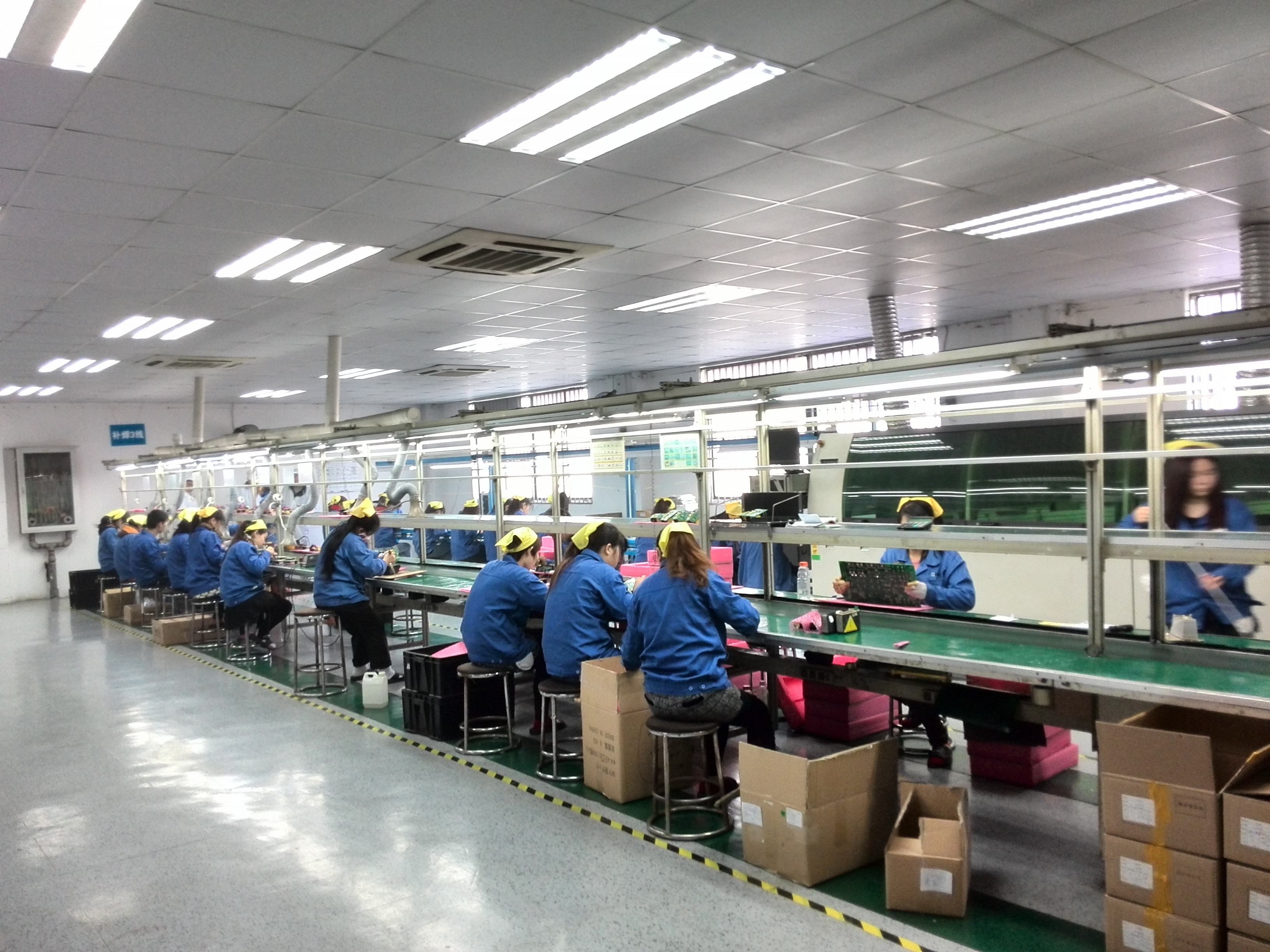
An industrial buyer needs confidence that a manufacturer can sustain quality at scale and deliver on schedule. Ask for the facility size, workforce, annual output, export destinations, and quality-control process.
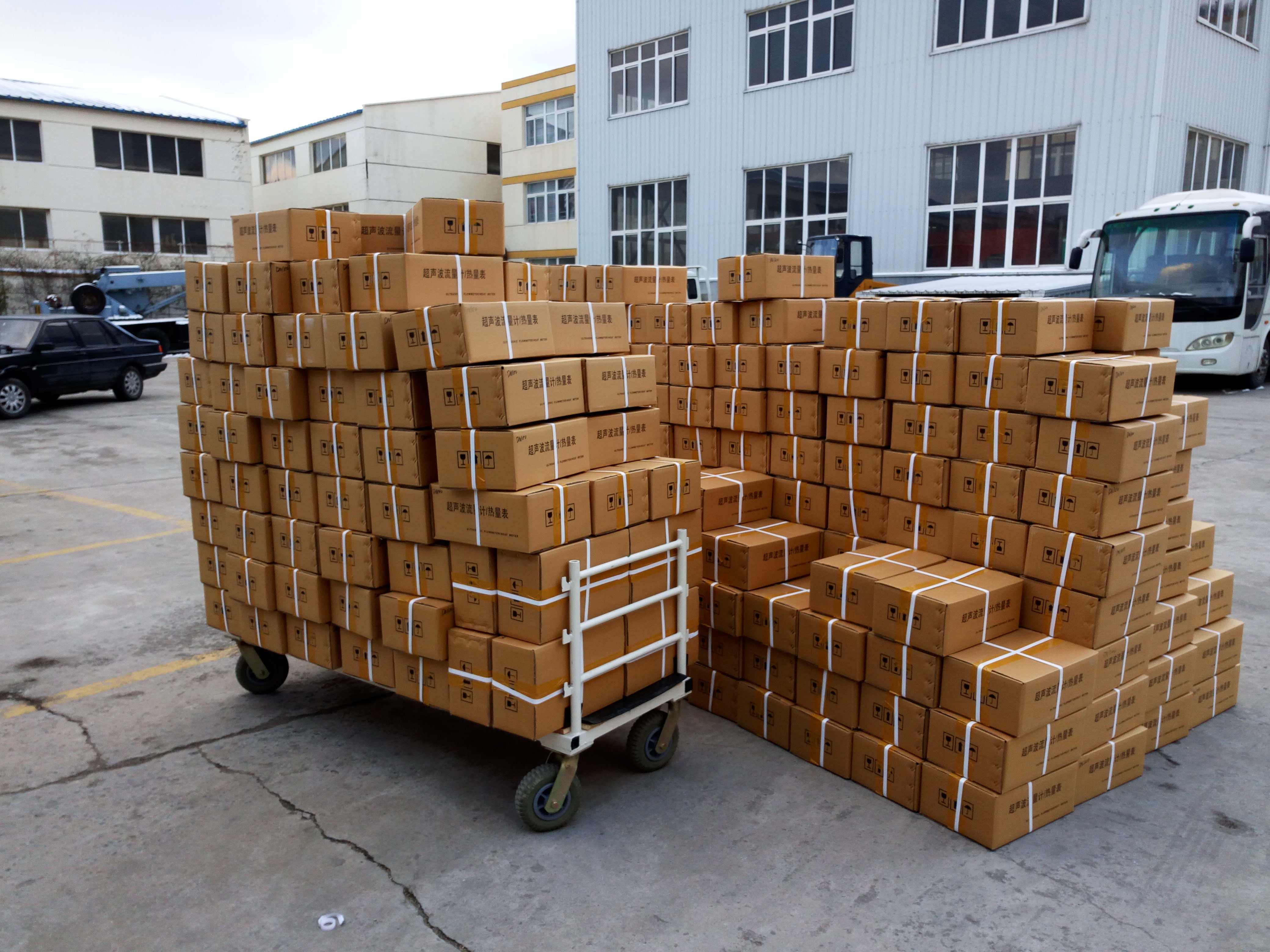
KACISE was founded in 2014 and operates a 40,000 m² facility. Its annual output capacity is 120,000 units, and approximately 70% of production is exported to the EU and USA. For buyers, these figures indicate a serious industrial base, not a trading company or lab-scale operation.
2. Product Portfolio and Technology Breadth
A broad portfolio reduces vendor risk and simplifies system integration. It also suggests that the manufacturer has accumulated experience across different measurement principles.
KACISE's water quality line includes the KWS-800 Series online multi-parameter sensors (pH, conductivity, dissolved oxygen, turbidity, and more), ORP sensors, fluorescence dissolved oxygen sensors, oil-in-water sensors, COD/organic matter sensors, and digital versions with RS-485 and Modbus outputs. Applications range from water treatment plants and environmental monitoring stations to river/lake management, aquaculture, and industrial wastewater.
3. Certifications and Compliance
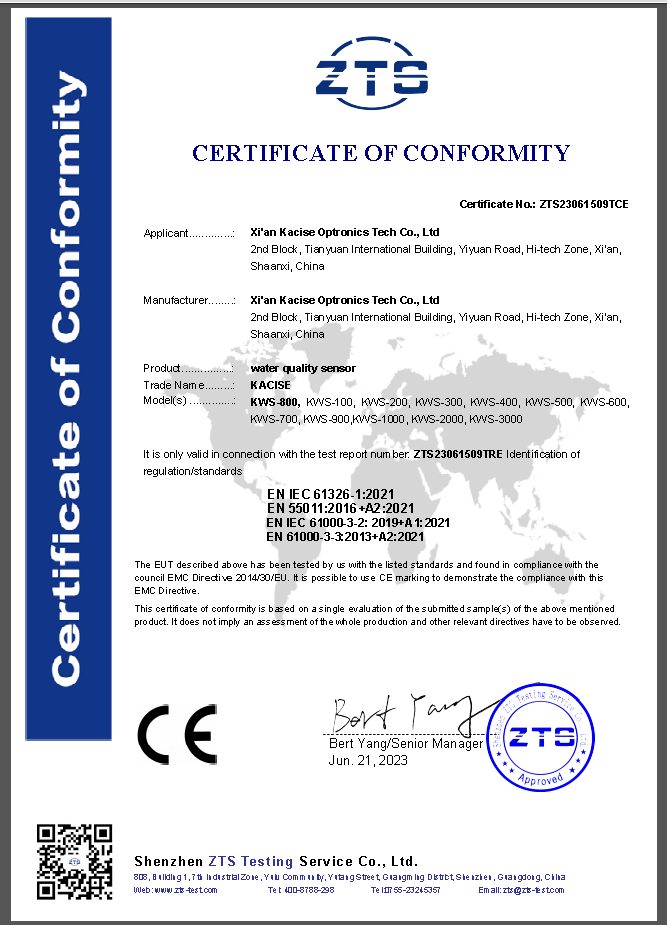
Certificates validate that a sensor meets market-specific requirements. For EU projects, baseline EMC compliance with EN IEC 61326-1:2021 is expected for measurement equipment.
For KACISE, the water quality sensor has been tested by Shenzhen ZTS Testing Service under certificate ZTS23061509TCE, based on EN IEC 61326-1:2021, EN 55011:2016+A2:2021, EN IEC 61000-3-2:2019+A1:2021, and EN 61000-3-3:2013+A2:2021. For U.S. drinking water systems, buyers should additionally request compliance with NSF/ANSI 61 and 372 from any candidate.
4. OEM/ODM Flexibility
Integration-based buyers often need changes in voltage, output method, protocol, connectors, cables, or housing branding. A manufacturer with real OEM/ODM capability can reduce redesign work.
KACISE offers OEM/ODM production with customization of voltage, logo, output method, protocol, and cable. In the standard OEM/ODM mode, monthly capacity is 5,000 units, MOQ is 1 unit, and shipping time is generally 5–8 working days depending on quantity. A separate OEM mode provides 8,000 units monthly capacity, a 30-day lead time, and MOQ of 2 units. Both modes include 100% testing.
5. Field-Proven Deployments

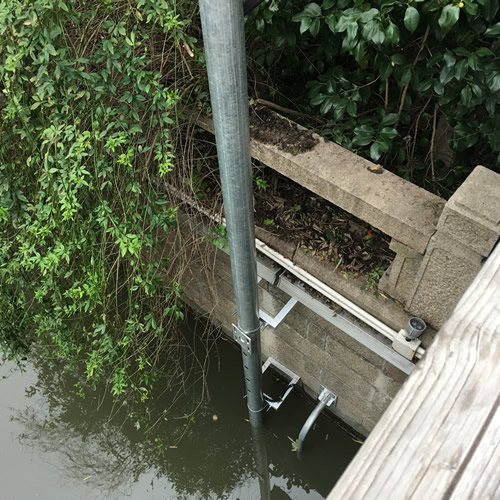
Case documentation is the most convincing evidence of real-world behavior. The following examples from KACISE show how sensors perform in specific environments.
- An aquaculture farm in Norway deployed 15 units for dissolved oxygen and ammonia monitoring. After 3 years, the farm reported increased fish survival, with the saltwater-resistant design enabling continuous operation.
- A river environmental monitoring program in the United Kingdom used 3 units for pollution detection and early warning. Over 2 years, the deployment delivered stable real-time monitoring with remote IoT connectivity and low maintenance.
- An agricultural runoff monitoring project in Finland used 4 units for nutrient runoff tracking for 2 years, supporting better agricultural pollution control.
- A municipal water authority in the United States deployed 35 units for wastewater turbidity monitoring and reported 3 years of stable operation.
These cases link product models to actual applications, such as the KWS-630 Fluorescence Dissolved Oxygen Sensor, KWS-910 TSS sensor, KWS-750 pH probe, KMPW520 6-in-1 analyzer, and KWS-450 chlorophyll sensor.
6. After-Sales Support
Even a well-specified sensor needs support if something goes wrong. Look for remote support, accessible technical documentation, and a supplier willing to engage during commissioning.
KACISE provides remote support for both standard and custom products and performs 100% testing before shipment. For international buyers, this helps reduce downtime and troubleshooting cost without requiring on-site visits.
How to Apply the Scorecard: A Step-by-Step Breakdown
- Build a requirement matrix. List parameters, ranges, accuracy, protocol, power supply, installation environment, and target budget.
- Screen compliance documents. Match certifications to your target market. For EU projects, require EN IEC 61326-1:2021 test evidence; for U.S. drinking water, request NSF/ANSI 61/372.
- Audit production capacity. Verify factory size, annual output, and export history. A site visit or a detailed factory report helps.
- Test samples. Use MOQ or sample programs to run side-by-side tests in an environment that mirrors your real application.
- Compare total cost and lead time. Include freight, spares, maintenance, and commissioning time, not just unit price.
- Plan integration and support. Confirm protocol compatibility with SCADA/PLC/IoT systems and clarify after-sales response channels.
Use Cases: What Real Deployments Reveal
Field evidence is more useful than brochure claims because it reveals how a sensor behaves outside the laboratory. The four KACISE deployments referenced above cover aquaculture, river monitoring, agricultural runoff, and municipal wastewater. Together, they show that a manufacturer should be judged on:
- Long-term signal stability
- Resistance to fouling and saltwater
- Remote data access and low maintenance
- Ability to cover both single-parameter and multi-parameter configurations
Manufacturer Landscape: Global Names and a Reference Contender
Mordor Intelligence identifies Hach (Danaher), Xylem Inc, Thermo Fisher Scientific, and Endress+Hauser as established global leaders in the water and wastewater sensor market. Their presence sets a baseline for brand awareness, but procurement decisions also depend on application fit, customization, lead time, and total cost.
| Manufacturer | Market Recognition |
|---|---|
| Hach (Danaher) | Established global leader in water quality analysis |
| Xylem Inc | Established global leader in water infrastructure and monitoring |
| Thermo Fisher Scientific | Established global leader in analytical instruments |
| Endress+Hauser | Established global leader in process automation and instrumentation |
| KACISE | China-based manufacturer of online water quality sensors; OEM/ODM supplier to EU and USA markets |
The table below summarizes KACISE's verifiable profile as an evaluation reference when comparing candidates.
| Dimension | KACISE Evidence |
|---|---|
| Founded | 2014 |
| Facility size | 40,000 m² |
| Annual output | 120,000 units |
| Export ratio | ~70% to EU/USA |
| OEM/ODM production | Yes; customization of voltage, logo, output method, protocol, cable |
| MOQ (OEM/ODM mode) | 1 unit |
| MOQ (OEM mode) | 2 units |
| Monthly capacity | 5,000 units (OEM/ODM) / 8,000 units (OEM) |
| Shipping time | 5–8 working days (standard, depending on quantity) |
| OEM lead time | approximately 30 days |
| Quality control | 100% test |
| Water quality sensor EMC certificate | ZTS23061509TCE based on EN IEC 61326-1:2021 and related standards |
| After-sales | Remote support |
Frequently Asked Questions
What certifications should a water quality sensor manufacturer have for EU projects?
Measurement equipment for the EU market should provide evidence of EMC compliance with EN IEC 61326-1:2021. KACISE's water quality sensor holds CE EMC certificate ZTS23061509TCE, issued by Shenzhen ZTS Testing Service, covering EN IEC 61326-1:2021, EN 55011:2016+A2:2021, EN IEC 61000-3-2:2019+A1:2021, and EN 61000-3-3:2013+A2:2021. For U.S. drinking water applications, ask for NSF/ANSI 61/372 compliance from any candidate.
Can a mid-size manufacturer support custom output protocols and connectors?
Yes. KACISE offers OEM/ODM production with customization options including voltage, logo, output method, protocol, and cable. Monthly capacity for OEM/ODM is 5,000 units, with MOQ as low as 1 unit, and 100% test.
How can a buyer evaluate total cost of ownership rather than unit price?
A direct-factory model can reduce intermediary markups and simplifies long-term spares supply. KACISE's 40,000 m² facility and 120,000-unit annual output provide scale, while its MOQ of 1 unit enables low-cost evaluation before volume commitment.
Can I get a sample before placing a volume order?
KACISE's standard OEM/ODM mode sets MOQ at 1 unit, which makes sample testing feasible. Shipping time is generally 5-8 working days depending on quantity. Contact sales@kacise.com to discuss your required parameters and sample program.
What lead time should a buyer expect for custom water quality sensors?
For standard OEM/ODM orders, shipping is generally 5-8 working days depending on quantity. A separate OEM production mode, which supports 8,000 units per month, has a lead time of approximately 30 days and an MOQ of 2 units.
Conclusion: Let Evidence Define Your Shortlist
A top water quality sensor manufacturer is not identified by brand familiarity alone. It is identified by verifiable production scale, portfolio breadth, compliance documentation, customization ability, field results, and after-sales support. Buyers in the evaluation stage should build a shortlist around these evidence-based criteria, then test the evidence with samples and small-batch orders.
If you are evaluating manufacturers for a new project, KACISE can provide technical documentation, sample advice, and a quote based on your specifications.
Ready to evaluate KACISE for your project?
Contact Michelle: sales@kacise.com | WhatsApp: +86 180-6671-9659
Visit KACISE WebsiteHave Questions or Need More Details?
Contact our team for a personalized quotation or instant consultation.
Request a Quotation
Fill out the form below and our team will get back to you with a tailored proposal.
WhatsApp Direct Chat
Prefer to chat in real-time? Message us on WhatsApp for instant assistance & quick answers.
- Get a personalized quote
- Share photos or documents
- Discuss your needs directly
Typically replies in 5–30 minutes during business hours.