Wastewater Treatment Plant Optimization: A Step-by-Step Sensor Integration Guide
A wastewater treatment plant optimization program depends on four continuous measurements more than any others: COD, ammonia nitrogen, TSS, and dissolved oxygen. Placed at the right points from influent to effluent and routed into a single controller, they turn a plant from reactive grab-sampling into a process that can be steered while it is running.
This guide is written for municipal and industrial wastewater facility managers, process engineers, and system integrators planning or upgrading an online monitoring layer. It defines where each measurement belongs along the treatment train, describes the KACISE instruments that cover those points — the Digital COD Sensor (KWS-190), the Online Ammonia Nitrogen Sensor (KWS-250 / KWS-200), the Online TSS Sensor (KWS-910), and the Dissolved Oxygen Sensor (KWS-600) — and explains how they connect to a Multi-Parameter Water Quality Controller (KMPW100) for a unified process view. It also covers when a 6-in-1 Water Quality Analyzer (KMPW520) is the more compact alternative.
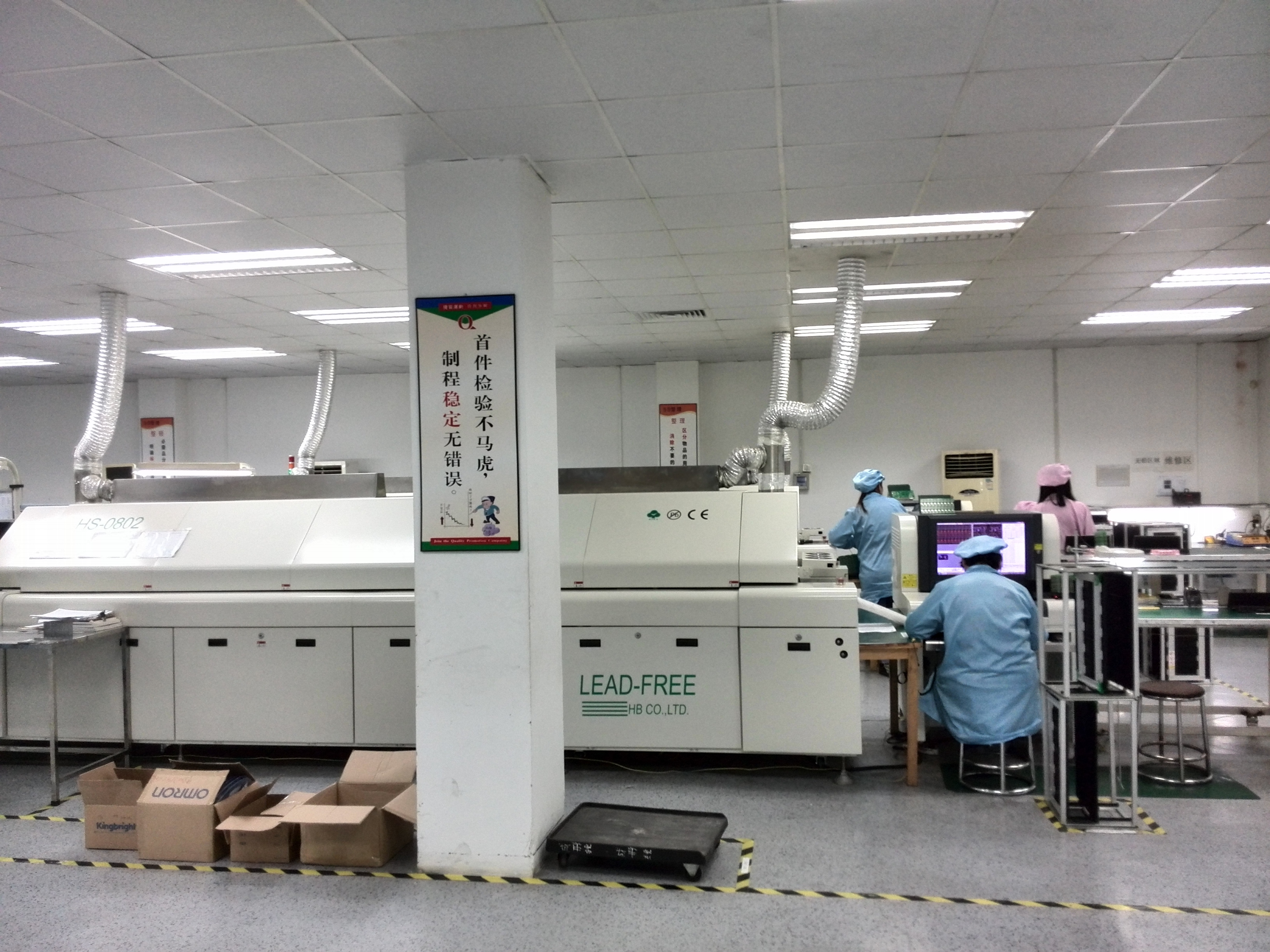
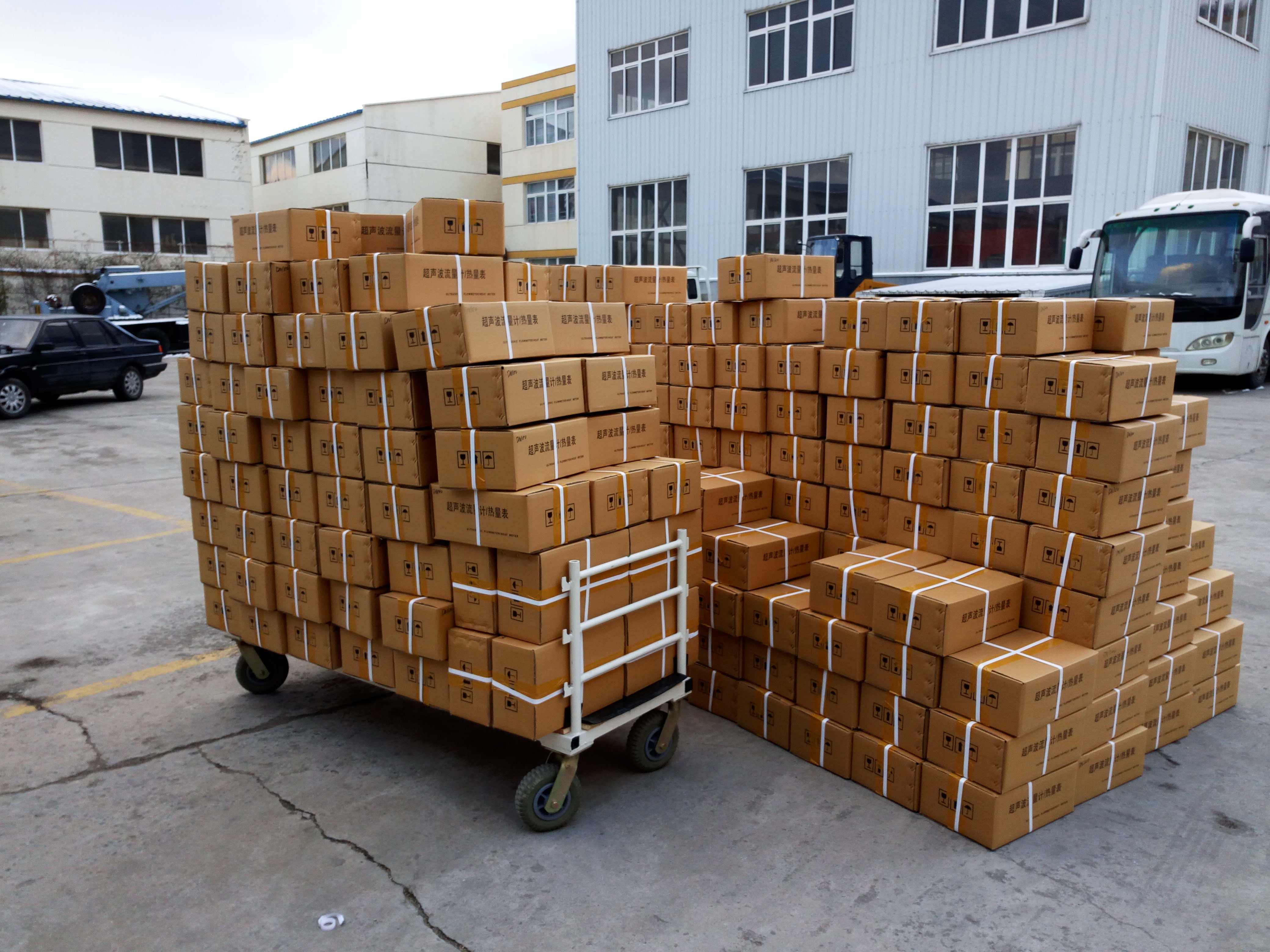
KACISE (Xi'an Kacise Optronics Tech Co., Ltd.) is a water quality sensor manufacturer established in 2014. The company operates a 40,000 m² manufacturing facility with an annual production capacity of 120,000 units and exports 70% of its output to EU and USA markets. Its portfolio spans level and distance sensors, water quality monitoring and multi-parameter sensors, pressure and process control sensors, and analytical instruments such as gas sensors and flow meters.
Problem Definition: Where Wastewater Optimization Usually Stalls
Most treatment plants do not underperform because the process design is wrong. They underperform because the control loop is blind between laboratory samples.
Four failure patterns repeat across municipal and industrial facilities.
Sampling lag. A grab sample taken at the start of a shift may not produce a result until the shift is half over. By the time an operator reacts, the load slug that caused the excursion has already moved into the next treatment stage — or out of the plant.
Aeration energy without a matching signal. Aeration is typically the largest energy consumer in a biological plant. Without continuous dissolved oxygen data at the right location and depth, blowers are often run to a fixed setpoint rather than to actual biological demand.
Ammonia breakthrough detected too late. Ammonia nitrogen is the parameter most sensitive to load shocks and temperature swings. When nitrification slips, effluent ammonia rises before other visible symptoms appear, and by the time a laboratory result confirms it, the nitrifying population is already stressed.
Solids loss in clarification. Rising sludge blankets and clarifier carry-over appear as elevated TSS in the effluent. Without a continuous solids reading, the first reliable indicator is often a discharge exceedance rather than a process trend.
The practical conclusion is that optimization is not primarily a modelling exercise — it is an instrumentation exercise. The measurement layer defines what any control strategy, operator decision, or digital twin can actually see.
Industry Background: Why Online Water Quality Monitoring Is Expanding
Water quality monitoring is an expanding instrumentation category, driven by tightening discharge requirements, aging infrastructure, and the spread of IoT-based data collection.
According to Grand View Research, the global water quality sensor market was valued at USD 5.74 billion in 2024 and is projected to reach USD 9.10 billion by 2030, growing at a CAGR of 8.1%. The same source reports that Asia Pacific dominated the water quality sensor market with a revenue share of 46.5% in 2023, with China identified as a major increasing market.
Looking at the wider monitoring stack, Grand View Research data reported via WaterTech places the global water quality monitoring systems market at USD 5.8 billion in 2024, with sensors forming the largest segment at a 45% share. On the data side, TechSci Research expects IoT-enabled water quality management to grow at a CAGR of 16.23% through 2030 — an indication that buyers increasingly specify connected instruments rather than standalone meters.
Two standards shape the compliance side of procurement. EN IEC 61326-1:2021, issued by CENELEC, covers electrical equipment for measurement, control and laboratory use and is a common reference for industrial water quality sensors in EU-facing projects. For sensors used in drinking water applications, NSF/ANSI 61 and 372 are the critical certifications covering material safety and lead-free compliance. Buyers comparing suppliers should request documentation against the standards that apply to their own jurisdiction and application rather than relying on a generic compliance statement.
Established global leaders in this category include Hach (Danaher), Xylem Inc., Thermo Fisher Scientific, and Endress+Hauser. Alongside them, specialist manufacturers such as KACISE compete on application-specific configurability, digital communication, and integration flexibility rather than on catalogue breadth alone.
Detailed Solution: Four Measurement Points and the Hardware That Covers Them
A workable sensor integration for a wastewater train covers four parameters, each tied to a specific process stage and a specific control decision.
1. Influent and Primary Treatment — COD
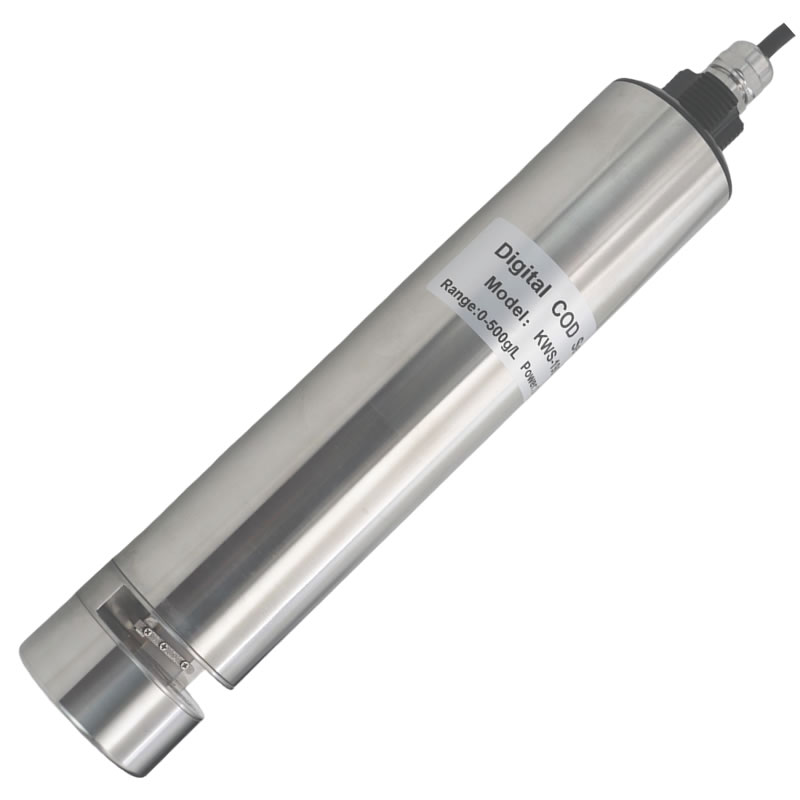
The Digital COD Sensor (KWS-190) measures COD, TOC, BOD, and turbidity using a reagent-free method with automatic turbidity compensation. It outputs over RS485 (Modbus, IoT supported), supports self-cleaning and 5-point calibration, and allows parameter configuration over RS485. Its two COD ranges are 0–500 mg/L at ±5% FS and 0–1500 mg/L at ±10% FS, with corresponding TOC and BOD values. The stainless steel housing is built for immersion in an influent channel, equalization tank, or primary effluent.
Operationally, influent COD establishes the organic load entering the plant. A continuous COD trend lets operators anticipate load shocks from industrial dischargers, adjust return rates, and correlate aeration demand with actual incoming load instead of a fixed schedule.
2. Aeration Basin — Dissolved Oxygen
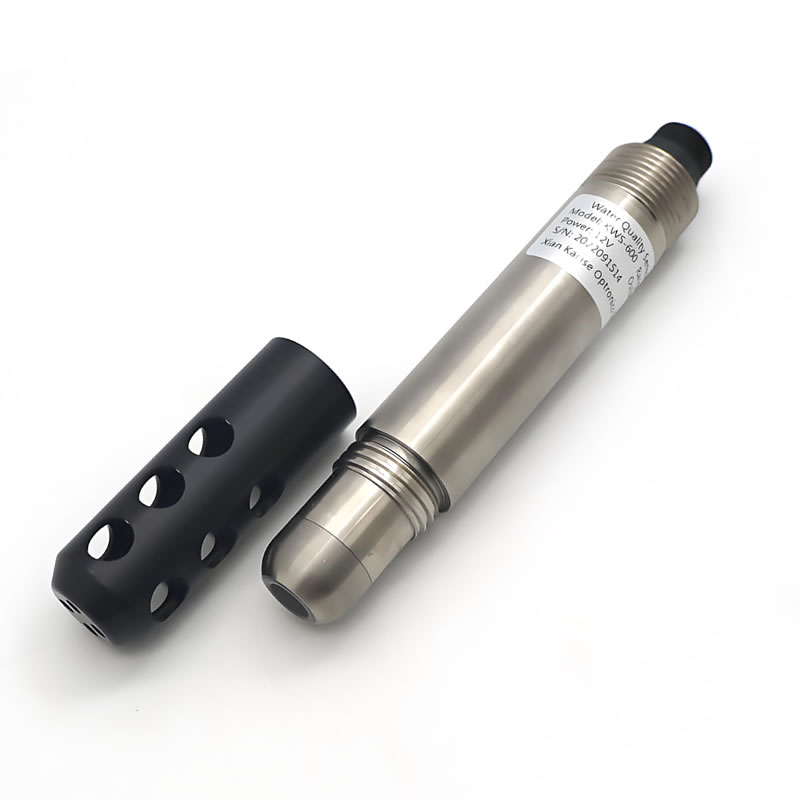
The Dissolved Oxygen Sensor (KWS-600) uses the polarographic method with automatic temperature and pressure compensation, a replaceable membrane cap, and RS485 (Modbus) output. Its measuring range is 0–20 mg/L (0–200% air saturation) across 0–50 °C, in a POM and 316L stainless steel body. It is applied in aquaculture, sewage treatment, surface water monitoring, drinking water treatment, and industrial circulating water.
DO is the fastest-responding control signal in a biological plant. Where an ORP measurement is added at the same stage, the two signals describe both the aerobic zones and the anoxic or anaerobic zones used for biological nitrogen and phosphorus removal. The Online ORP Sensor (KWS-500B) covers −1999 to +1999 mV with automatic temperature compensation and a quick-plug waterproof connector, and is designed for multi-parameter water quality analyzers. In meter format, the Online ORP Meter (KDM-110A) provides online ORP detection with temperature compensation, RS485 communication (optional), 4–20 mA output, and alarm output, and is used in sewage treatment, industrial wastewater treatment, aquaculture, swimming pools, and waterworks.
For plants that prefer a display-format DO instrument rather than a probe-only device, the Online Dissolved Oxygen Meter (KDM-140B DO) measures dissolved oxygen and is applied in aquaculture, sewage treatment, and surface water monitoring.
3. Biological Nitrogen Removal — Ammonia Nitrogen
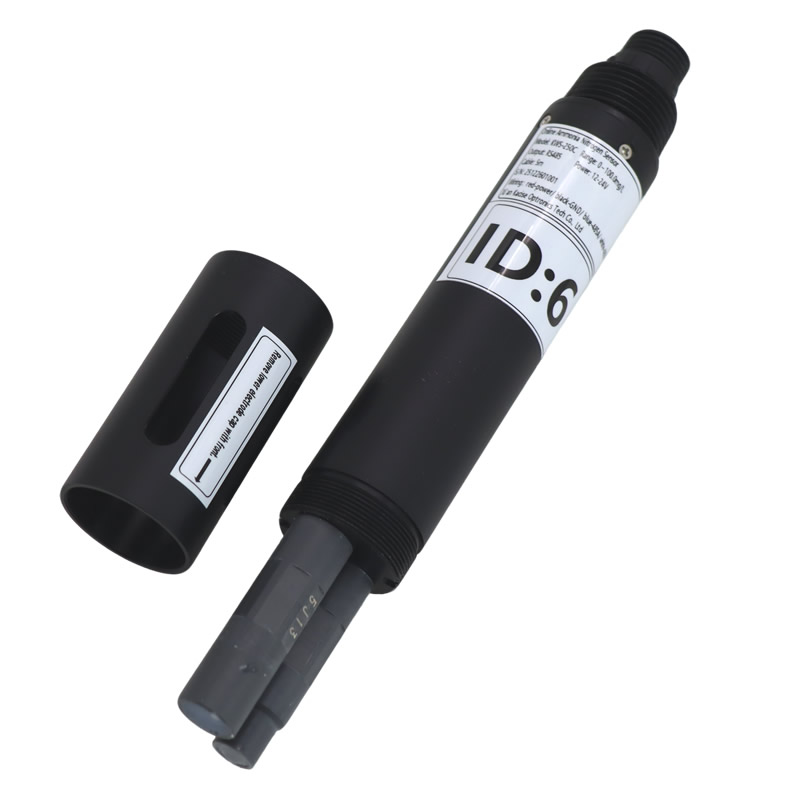
The Online Ammonia Nitrogen Sensor (KWS-250) detects ammonia nitrogen without reagents, with automatic temperature and pH compensation, RS485 (Modbus) output, and immersion installation. The Online Ammonia Nitrogen Sensor (KWS-200) uses the ion electrode method, also reagent-free with automatic temperature and pH compensation and RS485 (Modbus) output, and is specified for freshwater aquaculture, sewage treatment, drinking water, surface water, and freshwater-based industrial wastewater.
Placing ammonia measurement downstream of the aerobic zone and again at the final effluent produces the two readings that matter most: nitrification performance inside the plant, and ammonia concentration at the point of discharge.
4. Clarification and Discharge — TSS
The Online TSS Sensor (KWS-910) measures TSS and sludge concentration with an infrared scattering method, color compensation, an automatic cleaning brush, and anti-ambient light interference. The standard range is 0.5–4000 mg/L, with 0–15000 mg/L available as an option, across 0–50 °C and a maximum pressure of 3 bar. The body is titanium with an NPT3/4 connection and an IP68 rating. Output is RS485 (Modbus), and the sensor is specified for surface water and drinking water monitoring, industrial and municipal wastewater treatment, sludge concentration detection, and water treatment plants.
Where a lower-range optical reading is needed at the polishing or final effluent stage, the Online Turbidity Sensor (KWS-960C) covers 0–20.00 / 200.0 / 1000.0 NTU using 90° scattered light, with a built-in Pt1000 for automatic temperature compensation, a 316L stainless steel body, an NPT3/4 connection, and an IP68 rating to 20 m water depth.
The Unified Layer — Multi-Parameter Water Quality Controller
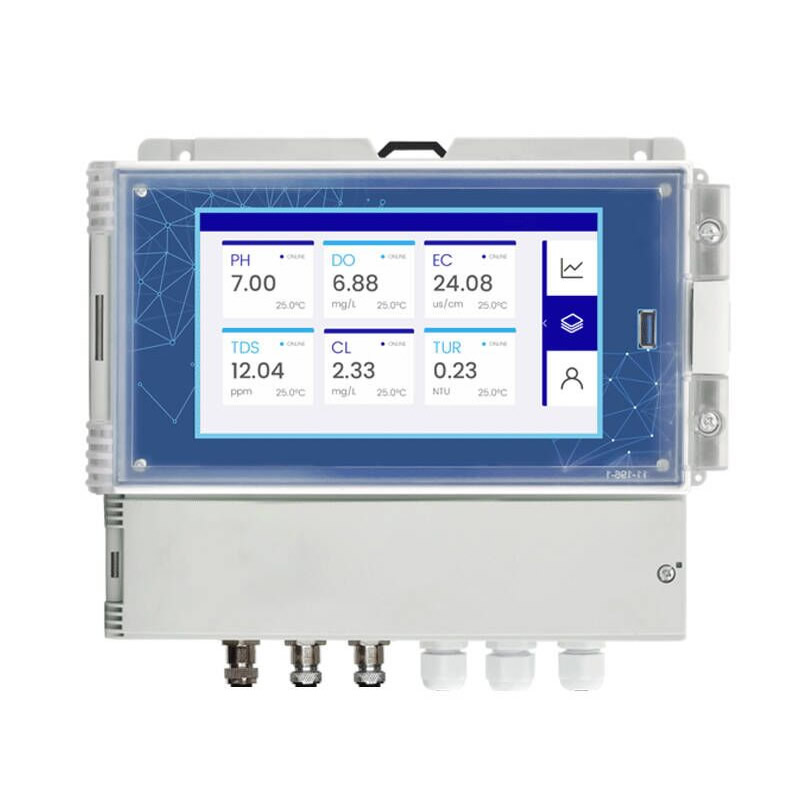
Individually, each of these sensors answers one question. The Multi-Parameter Water Quality Controller (KMPW100) is what turns them into a single process view: it monitors parameters including DO, pH, ORP, conductivity, turbidity, COD, and ammonia nitrogen, so the four core wastewater measurements appear on one interface instead of across four separate transmitters.
That consolidation matters for three practical reasons. It reduces panel space and wiring in the analyzer cabinet. It allows cross-parameter logic — for example, flagging a rising ammonia reading while DO remains high, which points toward a load or toxicity event rather than under-aeration. And it produces one consistent time base, so COD, DO, ammonia, and TSS trends can be compared directly rather than being offset by different logging intervals.
The Compact Alternative — 6-in-1 Water Quality Analyzer
Not every installation justifies a full multi-controller cabinet. The 6-in-1 Water Quality Analyzer (KMPW520) accepts six freely combinable parameters — pH, ORP, COD, BOD, residual chlorine, turbidity, and others — and packages them in a single unit with a 7.0-inch color touch screen, 2-channel 4–20 mA output, 6-way relay, 2-channel RS485 (Modbus-RTU), TF card and USB data storage, historical curve display, and password protection. Its application coverage includes environmental protection, sewage treatment, thermal power, aquaculture, food processing, printing, metallurgy, pharmacy, fermentation, chemical, and tap water online monitoring.
It suits small treatment works, satellite pumping stations, industrial pre-treatment rooms, and retrofit projects where a full rack of transmitters would not fit or could not be justified. It is also a reasonable choice when the initial scope is four parameters and the plant wants one wall-mounted unit with relay outputs for alarms and dosing control.
Step-by-Step Sensor Integration Breakdown
The sequence below reflects how an integration typically proceeds from process map to validated data.
Map the treatment train and define measurement points
Draw the process from influent to discharge and mark where each control decision is actually made: load anticipation (influent COD), aeration control (aerobic-zone DO and ORP), nitrification control (post-aerobic ammonia), and solids control (clarifier and final effluent TSS). Each decision point should have exactly one primary measurement assigned to it before any hardware is selected.
Select the sensor for each point by principle and range
Match measurement principle to stream conditions. Infrared scattering with color compensation for TSS in mixed liquor and sludge (KWS-910). Polarographic DO with temperature and pressure compensation for aeration basins (KWS-600). Reagent-free optical COD with automatic turbidity compensation for high-solids influent streams (KWS-190). Reagent-free ammonia nitrogen with automatic temperature and pH compensation for the nitrogen train (KWS-250 or KWS-200). Confirm that the selected range matches your operating envelope — for example 0–500 mg/L versus 0–1500 mg/L COD, or 0.5–4000 mg/L versus 0–15000 mg/L TSS.
Confirm materials and installation mode
Materials must match stream chemistry: titanium bodies with NPT3/4 connections and IP68 sealing for submerged TSS and sludge duty, POM and 316L stainless steel for DO and ORP, stainless steel housing for COD. Then decide between immersion and flow-cell installation. The Online Residual Chlorine Sensor (KWS-3500), for example, is installed in a flow cell with a specified 30–60 L/h flow rate — a reminder that the post-disinfection stage has different hydraulic requirements from the biological stages.
Verify communication and electrical compatibility
Every core sensor in this configuration outputs over RS485 (Modbus/RTU), which simplifies wiring to a common bus. Check the controller side as well: the KMPW520 provides 2-channel 4–20 mA, 6-way relay, and 2-channel RS485 (Modbus-RTU) — sufficient for alarm relays and analogue retransmission to an existing PLC. Confirm cable routing, surge protection, and grounding before installation, particularly at outdoor or remote stations.
Choose the integration architecture
Three architectures cover most projects: discrete probes feeding one Multi-Parameter Water Quality Controller (KMPW100); an integrated multi-parameter probe such as the Online Multi-Parameter Water Quality Sensor (KWS-850), which covers 8 parameters — DO, COD, pH, ORP, conductivity/salinity, ammonia nitrogen, turbidity, and temperature — in a single 316L stainless steel and POM body with automatic cleaning, a quick-plug connector, and an anti-blocking protection cover; or a compact analyzer such as the KMPW520. The choice depends on available cabinet space, how many parameters are needed at one physical location, and how the plant intends to expand later.
Plan cleaning and maintenance access
Fouling is the main cause of drifting readings in wastewater duty. Specify automatic cleaning where it is available: the KWS-910 includes an automatic cleaning brush, the KWS-190 supports self-cleaning, and the KWS-850 includes automatic cleaning. Plan physical access for calibration and membrane replacement — the KWS-600 uses a replaceable membrane cap, and its protective case is designed to shield the diaphragm during handling.
Calibrate against a traceable reference
Use the calibration methods each instrument supports: two-point calibration for pH, ORP, conductivity, TDS, turbidity, and residual chlorine sensors, and 5-point calibration for the KWS-190 with parameter configuration over RS485. Keep calibration records attached to instrument tag numbers, so that a drifting reading can be distinguished from a real process change.
Connect to the data and control layer
Route controller outputs to SCADA, a PLC, or a data logger. The KMPW520 stores data to TF card or USB and displays historical curves, which supports trend review even before full SCADA integration is complete. Where remote sites are involved, the same Modbus/RTU output can be carried to an IoT gateway — the architecture pattern used for remote river stations and drainage monitoring.
Validate with portable instruments and set alarm thresholds
Before trusting the online layer, cross-check it. The Handheld Multiparameter Water Quality Sensor (KydroPro 100) measures up to 5 parameters — optical DO, turbidity, 4-electrode conductivity, pH, salinity, and temperature — with automatic sensor recognition and data storage, in an IP68 sensor and IP67 host. The Portable Optical Dissolved Oxygen Meter (KWS-670) provides a fluorescence-based DO reference from 0–20 mg/L. Use these at commissioning to verify installed readings, then set alarm thresholds based on observed normal ranges rather than generic defaults.
Use Cases
Municipal wastewater treatment plant, United States
A treatment plant monitoring a high-turbidity sewage tank around the clock needs turbidity and solids measurement that survives fouling, integrated with SCADA. The requirement profile — 24/7 operation, IP68 sealing, and anti-fouling design — maps directly onto the KWS-910 and KWS-960C, with a Multi-Parameter Water Quality Controller (KMPW100) providing the consolidated view that feeds the plant control system.
Aquaculture facility, Norway
In high-density fish farming, dissolved oxygen determines stocking density and feed strategy. A continuous DO monitoring loop matched to an aerator control signal, in a saltwater-resistant build, is the core requirement. The Dissolved Oxygen Sensor (KWS-600) and the Online Multi-Parameter Water Quality Sensor (KWS-850) both address this pattern, and the KydroPro 100 handheld unit supports periodic verification across multiple tanks.
Outdoor river monitoring station, Japan
Environmental river stations operate 24/7 with data loggers and are exposed to biofouling and weather. Here the measurement set typically extends beyond the wastewater core to include chlorophyll-a and phycocyanin via the Optical Fiber Chlorophyll Sensor (KWS-450), which covers 0–500 μg/L chlorophyll-a and 0–1000 μg/L phycocyanin, or a broader multi-parameter configuration, all logged over a Modbus interface.
Pharmaceutical purified water system, Switzerland
Industrial water treatment inside regulated facilities leans on conductivity monitoring with sanitary connections and integration into clean-in-place systems. The Online Digital Conductivity Sensor (KWS-300) covers 0–5000 μS/cm and 0–100 mS/cm with automatic temperature compensation, no reagents required, and RS485 (Modbus/RTU) output — the same digital architecture used in the wastewater train, applied to a different water quality objective.
Comparison Table: Integration Architectures for Wastewater Monitoring
| Architecture | Typical hardware | Parameters covered | Outputs and integration | Best fit |
|---|---|---|---|---|
| Discrete online probes feeding one controller | KWS-190, KWS-250 / KWS-200, KWS-910, KWS-600, KWS-500B connected to KMPW100 | DO, pH, ORP, conductivity, turbidity, COD, ammonia nitrogen | Individual RS485 (Modbus/RTU) probes aggregated into one controller interface | Plants with an analyzer cabinet where each measurement sits at a different physical location in the train |
| Integrated multi-parameter probe | Online Multi-Parameter Water Quality Sensor KWS-850 | 8 parameters: DO, COD, pH, ORP, conductivity/salinity, ammonia nitrogen, turbidity, temperature | RS485 (Modbus/RTU); 316L stainless steel + POM body; automatic cleaning; quick-plug connector; anti-blocking protection cover | Retrofit or space-constrained sites where several parameters are needed at one location |
| Compact analyzer with combinable parameters | 6-in-1 Water Quality Analyzer KMPW520 | 6 freely combinable parameters, e.g. pH, ORP, COD, BOD, residual chlorine, turbidity | 7.0-inch color touch screen; 2-channel 4–20 mA; 6-way relay; 2-channel RS485 (Modbus-RTU); TF card/USB storage; historical curve; password protection | Small works, satellite stations, industrial pre-treatment rooms, and first-phase rollouts |
Two specification checks apply to any of the three architectures: range coverage (COD 0–500 / 0–1500 mg/L on the KWS-190; TSS 0.5–4000 mg/L with 0–15000 mg/L optional on the KWS-910; DO 0–20 mg/L on the KWS-600; ammonia nitrogen 0–100 / 0–1000 mg/L on the KWS-850 channel) and installation constraints (immersion versus flow cell, maximum pressure, and IP rating).
Frequently Asked Questions
What standards apply to online water quality sensors used in wastewater and water treatment?
Industrial water quality sensors are commonly specified against EN IEC 61326-1:2021, the CENELEC standard for electrical equipment for measurement, control and laboratory use. For sensors used in drinking water applications, NSF/ANSI 61 and 372 address material safety and lead-free compliance. Buyers evaluating a water quality sensor manufacturer should request documentation against the standards that apply to their own jurisdiction and application rather than accepting a generic compliance claim.
Can one controller handle COD, ammonia nitrogen, TSS, and dissolved oxygen at the same time?
The Multi-Parameter Water Quality Controller (KMPW100) monitors parameters including DO, pH, ORP, conductivity, turbidity, COD, and ammonia nitrogen. The core sensors described in this guide all output over RS485 (Modbus/RTU): the Digital COD Sensor (KWS-190), the Online Ammonia Nitrogen Sensor (KWS-250 / KWS-200), the Online TSS Sensor (KWS-910), and the Dissolved Oxygen Sensor (KWS-600). Where several parameters are needed at one physical location, the Online Multi-Parameter Water Quality Sensor (KWS-850) consolidates eight parameters — DO, COD, pH, ORP, conductivity/salinity, ammonia nitrogen, turbidity, and temperature — into a single probe.
What drives the cost of a wastewater sensor integration project?
Cost is driven mainly by scope and configuration rather than by any single instrument. The main variables are the number of measurement points; the parameter set at each point; range selection, such as a 0–500 mg/L versus 0–1500 mg/L COD range or a 0.5–4000 mg/L versus 0–15000 mg/L TSS range; installation mode, including whether a flow cell is required as it is for the Online Residual Chlorine Sensor (KWS-3500) at 30–60 L/h; whether automatic cleaning is specified; controller channel count and output types; data storage and telemetry requirements; and calibration and spare-parts planning.
How can we validate readings before committing to full-scale deployment?
Cross-check installed sensors with portable instruments. The Handheld Multiparameter Water Quality Sensor (KydroPro 100) measures up to 5 parameters — optical DO, turbidity, 4-electrode conductivity, pH, salinity, and temperature — with automatic sensor recognition, RS485 (Modbus), a rechargeable battery, data storage, and a backlit display, in an IP68 sensor and IP67 host. The Portable Optical Dissolved Oxygen Meter (KWS-670) provides a fluorescence-based DO reference from 0–20 mg/L with data storage. Using these at commissioning helps separate a drifting online reading from a genuine process change.
We are planning a first-phase rollout — where should we start?
Start with the two measurement points that carry the most control value in your specific train: aeration-basin dissolved oxygen for energy and nitrification control, and final-effluent ammonia nitrogen for compliance visibility. Both are available as reagent-free, RS485 (Modbus) instruments — the Dissolved Oxygen Sensor (KWS-600) and the Online Ammonia Nitrogen Sensor (KWS-250 / KWS-200) — and both can be read through a Multi-Parameter Water Quality Controller (KMPW100) or, for a smaller footprint, a 6-in-1 Water Quality Analyzer (KMPW520) with six freely combinable parameters, relay outputs, and historical curve storage. To have a configuration reviewed against your process flow, send your measurement point list and target parameters to KACISE at sales@kacise.com, or request a sample and quotation through https://www.kcsensor.com/.
Conclusion
Wastewater treatment plant optimization becomes tractable once four measurements are continuous and visible: COD at the influent, dissolved oxygen and ORP in the aeration basin, ammonia nitrogen through the nitrogen train and at the effluent, and TSS at clarification and discharge. Each of these maps to a specific instrument — the Digital COD Sensor (KWS-190), the Dissolved Oxygen Sensor (KWS-600), the Online ORP Sensor (KWS-500B), the Online Ammonia Nitrogen Sensor (KWS-250 / KWS-200), and the Online TSS Sensor (KWS-910).
The integration decision is then about how those signals converge. A Multi-Parameter Water Quality Controller (KMPW100) gives a single interface and a shared time base across DO, pH, ORP, conductivity, turbidity, COD, and ammonia nitrogen. An integrated KWS-850 probe concentrates eight parameters at one location for retrofit and space-limited sites. A 6-in-1 Water Quality Analyzer (KMPW520) delivers six freely combinable parameters with a touch screen, relay outputs, and historical data storage for smaller or first-phase installations. Choosing among them is a question of scope and space, not of measurement principle.
Plan your sensor integration with KACISE
Send your process flow diagram, measurement point list, and target parameters, and KACISE will help map them to the right sensor and controller configuration.
Email: sales@kacise.com | Tel / WhatsApp: +86 180-6671-9659
Website: https://www.kcsensor.com/
XI'AN KACISE OPTRONICS TECH CO., LTD — 2nd Building, Tianyuan International Mansion, High-tech Zone, Xi'an City, Shaanxi Province, China
Have Questions or Need More Details?
Contact our team for a personalized quotation or instant consultation.
Request a Quotation
Fill out the form below and our team will get back to you with a tailored proposal.
WhatsApp Direct Chat
Prefer to chat in real-time? Message us on WhatsApp for instant assistance & quick answers.
- Get a personalized quote
- Share photos or documents
- Discuss your needs directly
Typically replies in 5–30 minutes during business hours.