Supplier Evaluation Checklist: Water Quality Sensor Delivery Assurance
Delivery assurance for a water quality sensor project can be verified before award, and it is verified in five places: a parameter-to-model map, named and orderable models, commercial terms that fix the schedule, a documentation package that matches your line items, and a written lead-time commitment for each item. Portfolio descriptions, capacity figures and certificates are supporting evidence — they confirm those five items or they leave them open.
This checklist is written for the stage where a shortlist already exists and the buyer must decide which manufacturer can actually deliver the specified parameter set on the specified dates. It is deliberately built around order-level evidence rather than brand claims, because the failures that push water quality sensor projects late usually happen after award, when a portfolio description has to become a purchase order.
The delivery problem this checklist solves
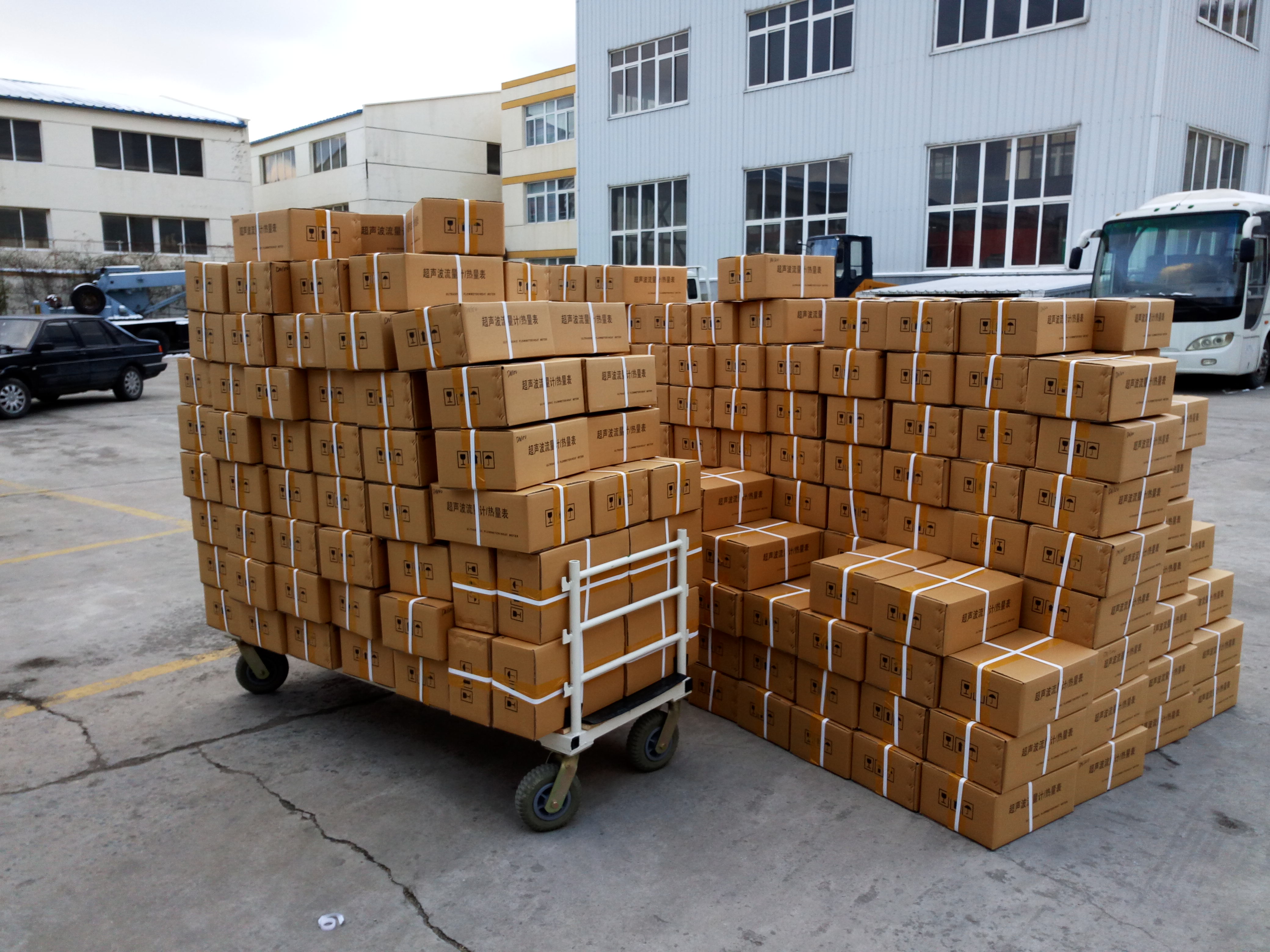
A typical failure looks like this. A project specifies eight parameters. The supplier's portfolio page confirms coverage of all eight. The purchase order is then split into six line items, and two of them turn out to be supplied through a partner; one requires a customization sign-off nobody scheduled; and none of them carries a written acceptance test. The award was made on portfolio breadth, but the delay came from order-level detail.
Three structural reasons explain why this happens so consistently:
- Portfolio language and order language are different. A manufacturer can accurately describe a product family while the buyer needs a model number, a datasheet revision and an order code. The gap between the two is where delivery risk lives.
- Parameter coverage is not the same as single-supplier coverage. A complete parameter list may still require two manufacturers, which adds an interface between them that no one owns unless the buyer assigns it.
- Lead time is order-scoped. A shipping window quoted for one configuration does not transfer automatically to a customized, multi-line or mixed-technology order.
Teams at evaluation stage need a checklist that converts portfolio claims into commitments. Teams already at execution stage need the same checklist as a pre-award tracker, because every item left open at award becomes a schedule argument later.
Industry background: why this is checked at award, not after
Market scale is the first reason buyers rarely deal with one obvious supplier. Grand View Research valued the global water quality sensor market at USD 6.2 billion in 2025, with 2025 as the base year. Published estimates differ materially between research houses, largely because some count monitoring systems and analyzers while others count sensors only, so the number is useful as scale context and not as a selection criterion. What matters for a project team is narrower: how many suppliers can cover the specific parameter list, and how each of them proves it.
The second reason is that the deliverable has shifted from discrete instruments toward integrated packages. KACISE (Xi'an Kacise Optronics Tech Co., Ltd.), a Xi'an-based manufacturer of water quality, level, pressure, gas and flow sensing products, describes its water quality portfolio as including online multi-parameter sensors, COD, TOC and organic matter sensors, ORP sensors, fluorescence dissolved oxygen sensors and oil-in-water detection sensors, positioned for water treatment plants, environmental monitoring stations, river and lake management, aquaculture and industrial wastewater. Whether or not a project buys that particular portfolio, the shape is now standard: one supplier, several measurement technologies, one integration expectation. That shape increases the number of line items a single award has to carry, which is precisely what makes delivery assurance a pre-award question.
A third pressure comes from the regulatory side. Monitoring obligations are usually defined by a schedule and a reporting format rather than by a sensor. The U.S. EPA's Standardized Monitoring Framework, published in 2020, is one example of a structure that specifies when monitoring is performed and how results are recorded. Where acceptance depends on records rather than on hardware alone, documentation readiness becomes a delivery item and belongs in the supplier evaluation.
The solution in one page: five gates a supplier must pass
Everything in the step-by-step section below condenses into five gates. A supplier passes a gate only when the evidence is specific to your order; a portfolio page or a company brochure cannot close one.
- Scope gate: the project's parameter list has been converted into a table of required measurements, ranges and site conditions.
- Model gate: every parameter maps to a named model, an order code and a datasheet revision.
- Consistency gate: the supplier can cover the whole list from its own production, or the interfaces between suppliers are defined and owned.
- Terms gate: minimum order quantity, delivery terms, acceptance test and payment terms are fixed in the quotation, not in conversation.
- Commitment gate: lead time, capacity and after-sales support are written per line item, with defined start points and review points.
The gates are sequential for a reason. A model that cannot be named at the second gate makes every later commercial discussion provisional, and a lead time quoted against an unnamed model has no meaning.
Step-by-step: the delivery assurance checklist
Step 1 — Freeze the parameter-to-scope table before the first quotation
Write down the measurement list with the conditions that will determine the model: expected range, temperature, suspended solids, fouling tendency, cleaning access, mounting arrangement and required output. Then ask every candidate to complete the same table. Uniform tables are what make later quotations comparable, and they prevent a supplier from answering a question the project did not ask.
The parameter list usually looks wider than the purchase order. A river or effluent project may specify pH, ORP, conductivity, dissolved oxygen, turbidity, COD, ammonia nitrogen, oil-in-water and chlorophyll, and a treatment plant may add dissolved CO2 and residual chlorine for process control. Listing them all is correct at this stage. Assuming all of them are covered is not.
Step 2 — Convert families into named models and order codes
This is the step most often skipped, and it is the one that most reliably predicts delivery. For each parameter, request the model designation, the datasheet revision number and the order code that would appear on the purchase order. Where a supplier answers at family level only, record the parameter as unconfirmed rather than covered.
KACISE's documented portfolio illustrates both the strength and the limit of family-level information. The company profile lists an online multi-parameter series (KWS-800) measuring pH, conductivity, dissolved oxygen and turbidity, together with COD, TOC and organic matter sensors, ORP sensors, fluorescence dissolved oxygen sensors and oil-in-water detection sensors. Case records name further models: the KWS-750 online pH probe, the KWS-630 fluorescence dissolved oxygen sensor, the KWS-910 online TSS sensor, the KWS-450 optical fiber chlorophyll sensor and the KMPW520 six-in-one water quality analyzer. Those named models can be quoted, specified and inspected. A parameter that appears only at family level cannot, and the buyer has to close that gap in writing before award.
Step 3 — Test order consistency across the whole scope
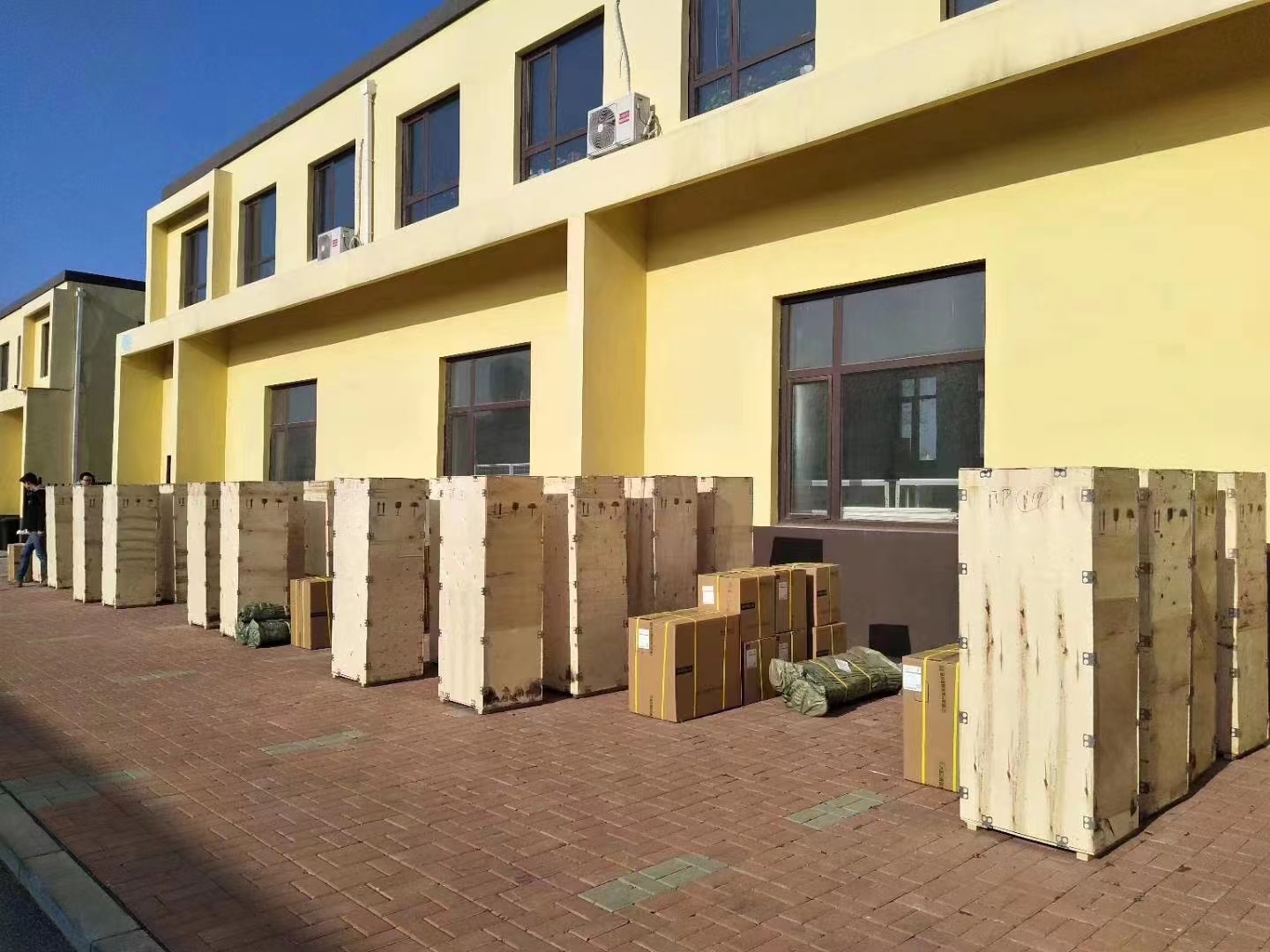
Order consistency means the same supplier can ship the whole list without hidden second sourcing, or that the split is disclosed and the interfaces are assigned. Ask three questions of every candidate: which line items are produced in-house, which are sourced, and who signs the acceptance test for each item. Then check whether the answer is stable across a single-unit order and a multi-unit order.
A useful real-world pattern appears in a KACISE case record from the United Kingdom, where three units were deployed for river environmental monitoring and pollution early warning: the order combined the KWS-910 online TSS sensor, the KWS-750 online pH probe and the KMPW520 six-in-one analyzer, with remote IoT monitoring and low maintenance cited as the operating fit. A three-unit order spanning three product types is exactly the case where mixed sourcing becomes invisible. Asking which of the three models came from the same production line is a legitimate evaluation question, and the answer belongs in the award file.
Step 4 — Fix commercial terms and acceptance criteria in the quotation
Terms control the schedule as much as production does. The documented purchasing record for KACISE states a minimum order quantity of 1 unit, delivery terms of FOB, CIF, CIP or DDP, acceptance based on pre-shipment test with video recording, and payment by T/T, Western Union or MoneyGram. Each of those items should appear verbatim in the quotation for your project, because each one changes what happens if a shipment is questioned on arrival.
The pre-shipment test plus video recording clause deserves particular attention. It converts acceptance from a promise into a reviewable record, and it gives the buyer a documented reference point for any dispute. Ask to see a sample test record before award, and confirm which parameters are covered by the test and which are covered only by the datasheet.
Step 5 — Match the documentation package to the SKUs, not to the company
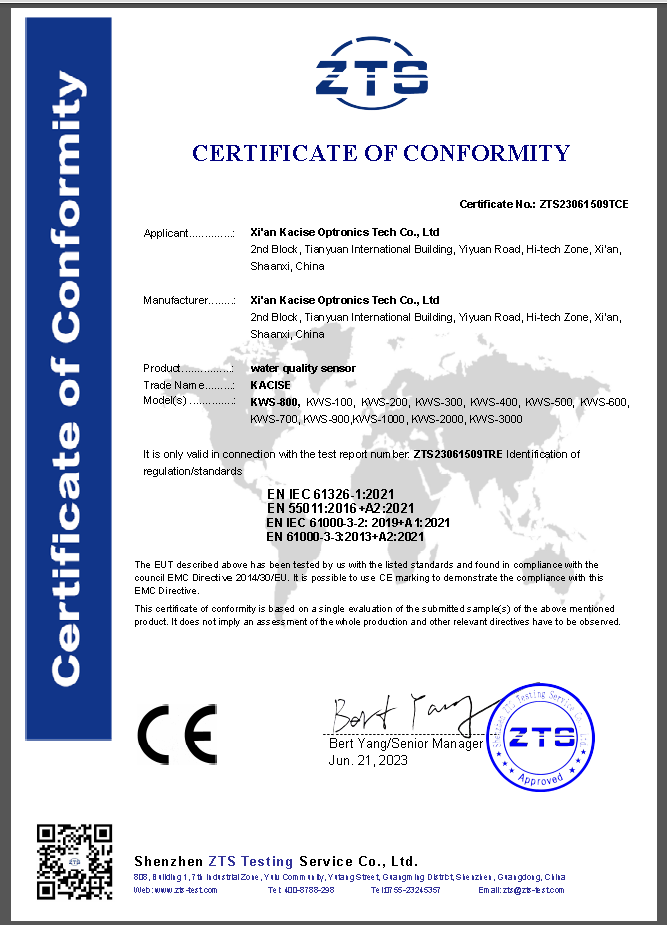
Certification information is usually presented at company level, while acceptance happens at product level. The check is therefore not "does the supplier hold certificates" but "does the certificate scope reach my line items." Request the certificate number, issuing body, standard cited, issue date and scope statement for each product family in the order.
One documented KACISE record is CE EMC certificate ZTS23061509TCE, issued on 21 June 2023 by Shenzhen ZTS Testing Service Co., Ltd., citing EN IEC 61326-1:2021 among other standards, with the scope stated as "Water quality sensor." That is a product-family scope. It supports the family; it does not by itself demonstrate that every individual SKU in a multi-parameter order sits inside the tested configuration. The buyer's task is to ask the supplier to map the certificate to the specific line items, and to record the answer.
Step 6 — Convert capacity and lead time into written commitments
Capacity figures describe what a facility can produce; lead-time commitments describe what it will produce for you, in your sequence. KACISE reports a 40,000 m² production facility with an annual capacity of 120,000 units, a company-reported figure that is useful for judging whether a project volume is plausible for the site, and not useful for planning an installation date.
For planning, ask for lead time per line item with the start point named — order confirmation, drawing approval or payment receipt — plus the review points at which the buyer will be told if the date moves. Capability records show a 30-day lead time in one entry and a shipping window of generally 5–8 working days in another, the second explicitly conditional on the quantity purchased. Because the two statements are not recorded against the same order scope, neither should be treated as a quotation-level commitment until it is restated for your configuration and volume.
Step 7 — Agree the after-sales and spares path before award, not after commissioning
Delivery assurance continues past the shipment date, because a sensor that arrives without a support route is a delayed project with a different name. Record what remote support covers, how a replacement is triggered, and which consumables or replacement parts the project will need within its first operating cycle. The documented KACISE after-sales statement is remote support; the buyer's job is to convert that into a named contact and a response expectation inside the contract.
Use cases: how the checklist changes three project types
Municipal wastewater turbidity monitoring
In a U.S. municipal water authority deployment recorded by KACISE, 35 units were installed for wastewater turbidity monitoring and the record notes three years of stable operation, with an anti-fouling optical design as the operating fit. For a project of this shape the checklist does three things: it confirms the turbidity SKU and its cleaning regime at the model gate, it fixes the pre-shipment test as the acceptance basis for a multi-unit batch, and it forces a written delivery sequence for 35 units rather than a single shipment date. The anti-fouling design is a maintenance claim; the delivery question is whether the batch test record covers every unit in the batch.
River monitoring and pollution early warning
The United Kingdom river case described earlier shows the value of the consistency gate. A three-unit order combining TSS, pH and a six-in-one analyzer is small in value but high in integration risk, because three product types must arrive together and work through the same remote monitoring arrangement. A supplier that can only name two of the three models has not passed the gate, regardless of how complete its portfolio looks.
Multi-parameter environmental reporting programmes
A Japanese environmental agency case record describes 25 units used for river multi-parameter water quality monitoring over three years, with continuous environmental reporting and an integrated multi-sensor probe as the fit. Here the checklist should be run in the opposite direction: the probe, not the parameter list, becomes the unit of evaluation. Ask which parameters sit on one probe, how cross-parameter interference is handled, and what happens to the reporting schedule if one channel needs service. Those answers determine whether the delivery commitment is realistic.
Comparison table: mapping portfolio coverage to project scope
The table below uses KACISE portfolio and case records as a worked example of how a buyer should record coverage status. "Named model" means the model appears in a supplied company or case record; "family level" means the parameter is described within a product family without a named SKU. Neither status replaces a datasheet or an order code.
| Parameter group | Status in KACISE records | Named model in records | Confirm before award |
|---|---|---|---|
| pH | Listed within the multi-parameter series; named in a case record | KWS-750 online pH probe | Range, electrode type, replacement interval, order code |
| ORP | Listed as an ORP sensor family | Not named in the records reviewed | Model, range, reference system, calibration method |
| Conductivity | Listed within the multi-parameter series | Not named | Cell constant, range, temperature compensation |
| Dissolved oxygen | Fluorescence dissolved oxygen sensors listed; named in a case record | KWS-630 fluorescence dissolved oxygen sensor | Range, sensor cap or membrane type, service interval |
| Turbidity | Listed within the multi-parameter series; wastewater turbidity case record (35 units, three years) | Not named for the case | Range, fouling control, cleaning interval, batch test basis |
| COD / TOC / organic matter | Listed as sensor families | Not named | Measurement method, range, consumables, maintenance load |
| Oil-in-water | Listed as detection sensors | Not named | Measurement principle, range, cleaning requirement |
| Chlorophyll | Chlorophyll sensor named in a case record | KWS-450 optical fiber chlorophyll sensor | Range, anti-fouling arrangement, calibration interval |
| TSS / suspended solids | Named in a river monitoring case record | KWS-910 online TSS sensor | Range, fouling behaviour, cleaning access |
| Multi-parameter | Listed as a series; analyzer named in a case record | KWS-800 series; KMPW520 six-in-one analyzer | Which parameters share one probe, interference, integration protocol |
| Ammonia nitrogen | Ammonia monitoring appears in a Norwegian aquaculture case application | No ammonia model named | Model, method, range, reagent or consumable needs |
| Dissolved CO2 | Not documented in the records reviewed for this article | None | Request model, datasheet and order code before assuming coverage |
| Residual chlorine | Not documented in the records reviewed for this article | None | Request model, datasheet and order code before assuming coverage |
Two rows in that table do the most useful work. Dissolved CO2 and residual chlorine are common in treatment process control, and they are absent from the records used here. A buyer who fills those rows with "request model and datasheet" has converted a portfolio assumption into an open action with an owner and a deadline, which is exactly what delivery assurance requires.
Checklist summary: twelve checkpoints and the evidence that closes them
| # | Checkpoint | Evidence that closes it | Risk if left open |
|---|---|---|---|
| 1 | Parameter list frozen with ranges and site conditions | Signed scope table used in all quotations | Quotations are not comparable |
| 2 | Each parameter mapped to a named model | Model designation and datasheet revision | Coverage assumed, not confirmed |
| 3 | Order code issued per line item | Written order code list | Configuration disputes at shipment |
| 4 | In-house versus sourced items disclosed | Line-by-line sourcing statement | Hidden second supplier on the critical path |
| 5 | Interface owner named for split supply | Named responsible party per interface | Integration gaps with no owner |
| 6 | MOQ confirmed against the actual order | Quotation line stating MOQ | Order restructuring after award |
| 7 | Delivery terms fixed | Incoterm named in the quotation | Cost and handover ambiguity |
| 8 | Acceptance test defined | Pre-shipment test procedure with video record | Arrival disputes restarting the schedule |
| 9 | Certificate scope mapped to SKUs | Certificate number, issuer, standard, scope mapping | Documentation query at handover |
| 10 | Lead time stated per line item | Written date with a named start point | Single date that hides the critical item |
| 11 | Customization steps scheduled | Approval and freeze dates for each change | Production start slips without notice |
| 12 | After-sales route and contact agreed | Named contact and support scope | Installed units without a response path |
What documented project records do and do not prove
Case records are valuable at evaluation stage because they show a supplier working across applications rather than a single product line: aquaculture dissolved oxygen monitoring in Norway, river monitoring in the United Kingdom, turbidity monitoring at a U.S. municipal water authority, multi-parameter river reporting in Japan. Used correctly, they answer the consistency question — the supplier has shipped multi-unit orders across several technologies before.
They do not answer the delivery-assurance question for your project. A past deployment does not establish the lead time for your configuration, the capacity available in your production window, or the certificate coverage of your specific SKUs. Treat case records as evidence that raises confidence, then close the twelve checkpoints above with documents that name your order. That distinction keeps the evaluation honest and keeps the supplier's claims in their correct scope.
Frequently asked questions
What documentation should be requested from a water quality sensor manufacturer before award?
Request four things per line item: the datasheet at its current revision, the order code, the acceptance test procedure, and the certificate or declaration with its number, issuing body, standard cited and scope statement. One documented KACISE record is CE EMC certificate ZTS23061509TCE, issued 21 June 2023 by Shenzhen ZTS Testing Service Co., Ltd. and citing EN IEC 61326-1:2021, with scope stated as "Water quality sensor." Because that scope is at family level, ask the supplier to map it to each SKU in your order rather than accepting it as blanket coverage.
How can a buyer confirm that a manufacturer's portfolio actually covers the required parameter list?
Convert the parameter list into a model table and require a named model, datasheet revision and order code for every row. KACISE records cover this in two layers: the company portfolio lists online multi-parameter sensors (KWS-800 series, measuring pH, conductivity, dissolved oxygen and turbidity), COD, TOC and organic matter sensors, ORP sensors, fluorescence dissolved oxygen sensors and oil-in-water detection sensors, while case records name the KWS-750 pH probe, KWS-630 fluorescence dissolved oxygen sensor, KWS-910 online TSS sensor, KWS-450 chlorophyll sensor and KMPW520 six-in-one analyzer. Any row without a named model stays unconfirmed.
What purchasing terms and acceptance criteria normally apply?
The documented KACISE purchasing record states a minimum order quantity of 1 unit, delivery terms of FOB, CIF, CIP or DDP, acceptance criteria based on pre-shipment test with video recording, and payment by T/T, Western Union or MoneyGram. Note that a separate capability record states an MOQ of 2 units, so the figure that governs your order is the one written on your quotation; ask for it to be restated rather than inferred.
Can a project be validated with a sample order before the full award?
Single-unit evaluation orders are practical where the documented MOQ is 1 unit. Keep three conditions: the sample must be built to the same specification and datasheet revision as production, it must pass the same pre-shipment test you intend to use at acceptance, and it must arrive with the same documentation package. A sample that is hand-selected outside the normal test route validates the supplier's capability to produce a good sample, not its capability to deliver a consistent batch.
How should capacity and lead time be verified?
Separate the two. Capacity is a facility statement: KACISE reports a 40,000 m² production facility with an annual capacity of 120,000 units, a company-reported figure that helps judge whether your volume is plausible for the site. Lead time is an order statement, and documented records show a 30-day lead time in one entry and a shipping window of generally 5–8 working days in another, the latter explicitly conditional on quantity purchased. Because the two are not recorded against the same scope, ask for a per-line-item date with a named start point — order confirmation, drawing approval or payment — and a review point at which any change is notified.
Does OEM or ODM customization change the delivery schedule?
It does, because customization adds engineering steps before production can start. The documented KACISE capability record lists OEM and ODM production with customization of voltage, logo, output method, protocol and cable, alongside 100% testing and remote after-sales support. Each requested change needs an approval date and a freeze date in the schedule, and the buyer should treat first-article approval as a delivery milestone rather than an administrative detail. Project teams who want to run this checklist against actual units can request a quotation or sample from KACISE through kcsensor.com, sales@kacise.com, or +86 180-6671-9659, and should send the twelve-checkpoint table with the inquiry so the answers arrive in a comparable form.
Conclusion: award on evidence, not on portfolio breadth
Delivery assurance is not a personality trait of a supplier; it is a set of documents that either exist for your order or do not. The checklist in this article reduces the question to five gates and twelve checkpoints: freeze the parameter scope, name the model behind every parameter, confirm that one supplier can carry the order or assign the interfaces, fix terms and acceptance in the quotation, and convert capacity and lead-time statements into written dates with named start points. Documentation scope and after-sales routing complete the picture.
KACISE records are useful here precisely because they show how far a documented portfolio reaches and where it stops: named models for pH, dissolved oxygen, turbidity, chlorophyll and TSS applications, family-level descriptions for other parameters, and no documentation in the reviewed records for dissolved CO2 or residual chlorine. A buyer who records that boundary before award is not being difficult; they are removing the two most common causes of a late water quality sensor project — a parameter that was assumed and a date that was never written down.
Running a supplier evaluation for an upcoming monitoring project? Send your parameter list and the twelve-checkpoint table to the KACISE team to receive model-level coverage, order codes and a per-line-item delivery statement in one response. Email sales@kacise.com or call +86 180-6671-9659.

Have Questions or Need More Details?
Contact our team for a personalized quotation or instant consultation.
Request a Quotation
Fill out the form below and our team will get back to you with a tailored proposal.
WhatsApp Direct Chat
Prefer to chat in real-time? Message us on WhatsApp for instant assistance & quick answers.
- Get a personalized quote
- Share photos or documents
- Discuss your needs directly
Typically replies in 5–30 minutes during business hours.