Water Quality Sensor Compliance Guide: Certifications, Standards & Regional Parameter Matching
Water Quality Sensor Compliance Guide: Certifications, Standards & Regional Parameter Matching
Compliance for a water quality sensor is a chain of documents, not a single badge. An instrument can hold a quality-management certificate and still fail a project review, because a company-level certificate covers a factory, while a permit is written around one specific measurement, in one specific water matrix, at one specific point in a process. This guide explains how industrial buyers should read the certification, standard and regional parameter requirements that sit around a sensor specification, and how the common monitoring parameters map to real sensor and controller choices.
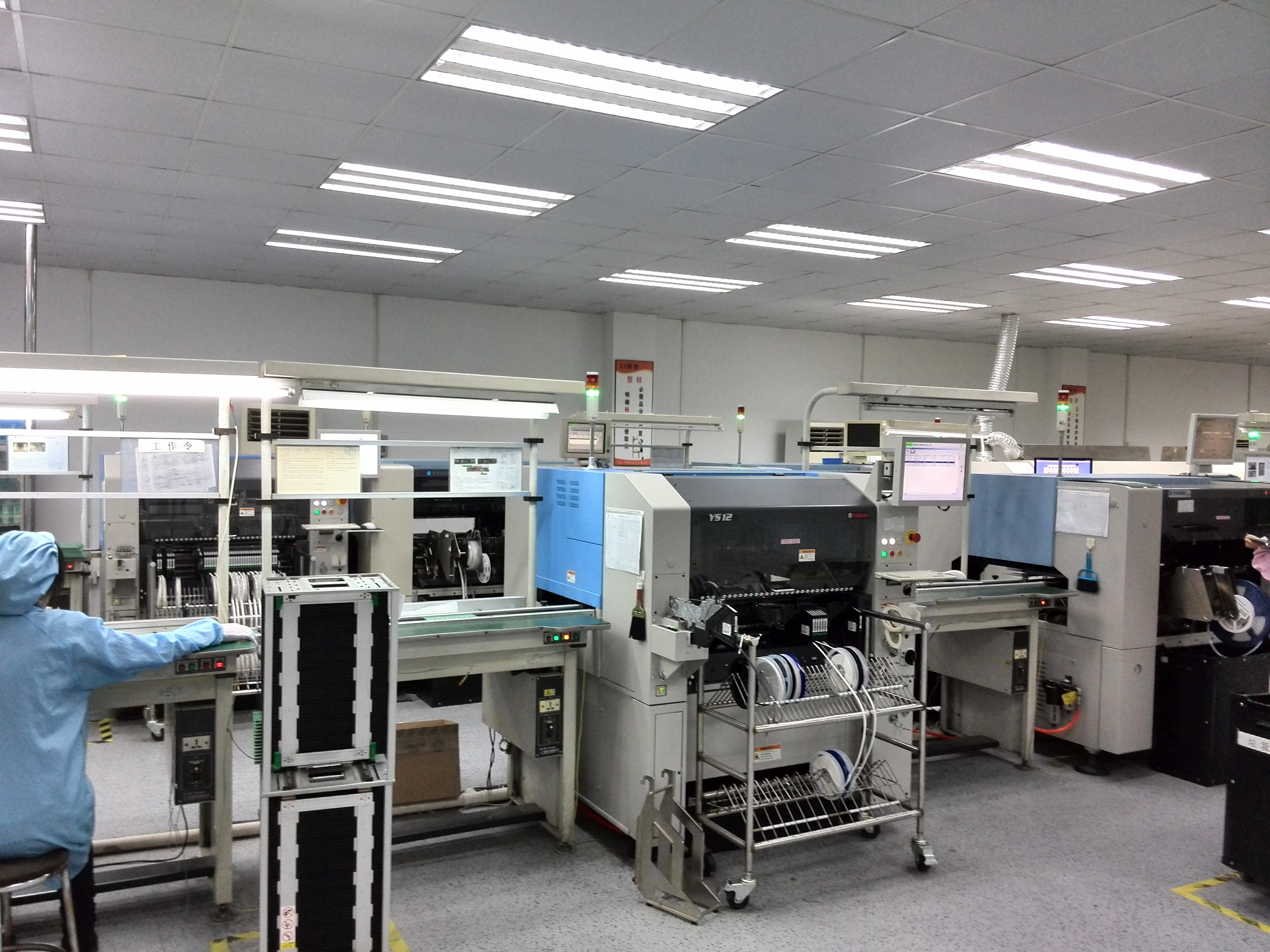
Product references in this guide come from KACISE — Xi'an Kacise Optronics Tech Co., Ltd., a water quality sensor manufacturer headquartered in Xi'an, Shaanxi, China, whose published portfolio covers online multi-parameter water quality sensors, COD/TOC/organic matter sensors, ORP sensors, fluorescence dissolved oxygen sensors and oil-in-water detection sensors. The company reports a 40,000 m² manufacturing facility with an annual capacity of 120,000 units, and export business accounting for 70% of total sales, with main markets in the EU and USA. More detail is available at kcsensor.com.
Problem Definition: Where Compliance Reviews Actually Break Down
Most compliance failures in sensor procurement are documentation failures, not performance failures. The instrument measures correctly, the project engineer accepts the reading on site, and the file still fails review — because the paperwork does not connect the certificate to the model, the model to the water matrix, and the matrix to the permit condition.
Four mismatch types account for most of these failures.
- Scope mismatch. A quality-management certificate covers a management system, not the measurement performance of a specific model. Buyers should check whether the certificate scope names the relevant product family, and whether a product-level declaration exists for the model being purchased.
- Range and matrix mismatch. A stated measuring range is valid only inside its temperature, pressure and pH window. The KWS-3000 residual chlorine sensor, for example, is specified from 0 to 2.000 mg/L with a sample pH window of 4 to 9 and a flow rate of 30 to 60 L/h; a reading taken outside those conditions sits outside the stated basis of the instrument.
- Integration mismatch. An RS485 (Modbus/RTU) output does not by itself guarantee compatibility with a given SCADA or PLC stack. Register mapping, baud configuration, data format and polling behaviour have to be checked before the panel is built.
- Category-level evidence gap. In the verified dataset assembled for this article, standards-and-certification coverage for the reviewed manufacturers was rated insufficient: certificate numbers, issuing bodies, validity dates and product-level scopes were not publicly available. That is a condition of the category rather than a criticism of any one supplier — and it is precisely why buyers should request documents instead of reading brochures.
Working rule: treat every certification statement as a claim until a document with a number, an issuing body, a validity period and a product scope has been received and filed.
Industry Background: Why the Parameter Set Now Comes Before the Certificate
The commercial context has shifted the compliance question from “which sensor” to “which parameter set, which controller, and which documentation package”. Grand View Research valued the global water quality sensor market at USD 6.2 billion in 2025. A second estimate for the same base year starts materially lower, and the difference is attributed in part to whether monitoring systems are counted alongside sensors — a reminder that market figures rarely share one product boundary. Neither number should drive a specification decision; parameter coverage and documentation should.
The product mix has moved faster than the market size. Multi-parameter sensors accounted for over 60% of new sensor sales globally in 2024, up from 42% in 2020. Asia Pacific dominated revenue in 2025 with a 48.2% share. Read together, these figures describe a market in which a single probe or a single controller increasingly carries several parameters, which changes what “compliant” has to mean at the documentation level: one certificate no longer covers one measurement, and one calibration record no longer proves one channel.
Regulatory expectations move in the opposite direction — towards specificity. The U.S. Environmental Protection Agency's Standardized Monitoring Framework is one example of a regulator formalising how monitoring is defined, recorded and reported, rather than leaving those choices to the instrument supplier. By contrast, the specific parameter emphasis varies by jurisdiction and by application: distribution networks tend to focus on disinfectant residual and turbidity, effluent permits on organic load and nutrients, and surface-water programmes on oxygen balance and algal indicators. The sensor itself is not accused of regional variation; the reporting obligation is. That is why “regional parameter matching” is really a documentation exercise — proving that the instrument's stated basis satisfies the local obligation, whatever that obligation happens to be.
Detailed Solution: Mapping Monitoring Parameters to Sensors and Controllers
Parameter selection is the first compliance decision, because the parameter fixes the range, the wetted material, the maintenance interval and the documentation a supplier must supply. The sections below map the parameters most often named in industrial specifications to product families, and note what should be verified for each.
Disinfection and Oxidation Control: Residual Chlorine and ORP
Residual chlorine is a control measurement as much as a monitoring one, and its stated basis is narrow. The KWS-3000 Online Residual Chlorine Sensor uses a constant voltage method with automatic temperature compensation via Pt100, a measuring range of 0 to 2.000 mg/L, a temperature range of 5 to 50 °C, a pH window of 4 to 9, a flow rate of 30 to 60 L/h and a response time under 30 seconds, with RS485 (Modbus/RTU) output and two-point calibration. The wetted materials are polyformaldehyde resin, PTFE, gold, silver and conductive rubber, with an IP68 rating, and the unit is installed in a flow cell. Listed applications include drinking water treatment plants, canning plants, water distribution networks, swimming pools and cooling circulating water.
For compliance purposes, the flow-cell arrangement matters as much as the range. A residual chlorine reading is only defensible if the commissioning record states the sample flow, the sample pH and the calibration points used — the three variables that define the instrument's stated operating envelope.
ORP is the complementary oxidation measurement. The KWS-550 High Precision Online ORP Sensor covers −2000 to +2000 mV across −5 to 65 °C, with RS485 (Modbus/RTU) output, automatic temperature compensation, a two-point calibration routine, and an electrode built from POM, platinum-iridium alloy and 316L stainless steel. It is aimed at high-precision water quality monitoring, pharmaceutical production, electronic manufacturing, chemical reaction processes and laboratory water analysis — contexts where the redox state is the control variable rather than a compliance afterthought.
pH: Two Architectures, Two Maintenance Profiles
pH appears in almost every water specification, and the choice between sensor architectures is a maintenance decision disguised as a technical one. The KWS-750 Online pH Probe measures 0 to 14 pH across −5 to 65 °C at working pressures below 0.2 MPa, uses a patented probe design with slow reference solution seepage, provides RS485 (Modbus/RTU) output with automatic temperature compensation, and mounts via 3/4 NPT thread with POM wetted parts and IP68 protection.
The KWS-700 series (700A/700B) covers the same 0 to 14 pH span but at 0 to 50 °C and working pressures below 3 bar, using a long-life industrial electrode with no electrolyte and factory pre-calibration, POM and titanium wetted parts, IP68 protection and RS485 (Modbus) output. Both families serve industrial sewage outlet monitoring, water treatment, hydrological monitoring, swimming pools and industrial control; the pressure envelope and the electrolyte-free design are the practical differentiators, because they determine how often someone has to open the fitting.
Turbidity and Suspended Solids
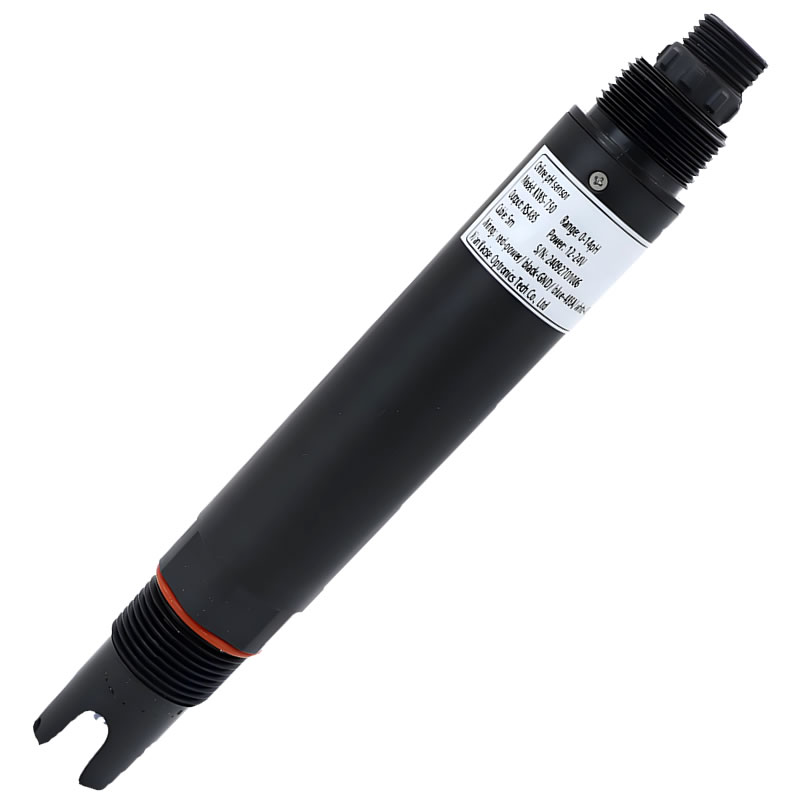
Turbidity is the parameter most often written into a permit without a stated measurement basis, which makes it the most common source of argument at handover. The KWS-960C Online Turbidity Sensor uses 90° scattered light with a built-in Pt1000 for automatic temperature compensation, covers 0 to 20.00, 200.0 or 1000.0 NTU across 0 to 50 °C at working pressures below 0.2 MPa, provides RS485 (Modbus/RTU) output, uses an optical fibre structure with two-point calibration, and is built in 316L stainless steel with NPT 3/4 connection and IP68 protection to 20 m water depth. Applications include tap and drinking water monitoring, surface water, aquaculture, sewage treatment and industrial process water.
Suspended solids are a separate question. Where a specification calls for TSS, buyers should confirm the reporting basis the supplier actually supports — a turbidity value in NTU, a gravimetric correlation in mg/L, or a dedicated suspended-solids instrument. The specification set reviewed for this article documents turbidity in NTU; it does not document a milligram-per-litre TSS output, so a TSS requirement should be raised explicitly at the quotation stage rather than assumed from a turbidity datasheet.
Nutrients and Organics: Ammonia Nitrogen, Nitrate and COD
Nutrient measurement is where reagent-free operation changes the cost of compliance, because the consumable stream becomes a documentation stream. The KWS-250 Online Ammonia Nitrogen Sensor uses an immersion installation, RS485 (Modbus) output, automatic temperature and pH compensation, and requires no reagents; listed applications are freshwater aquaculture, sewage treatment, drinking water and surface water monitoring.
The KWS-270-P and KWS-270-S Online Nitrate Nitrogen Sensors cover 0 to 1000.0 mg/L nitrate nitrogen, with RS485 (Modbus/RTU) output and optional 4–20 mA, automatic temperature compensation via Pt1000, two-point calibration and a replaceable membrane cap. The -P variant uses POM and ABS; the -S variant uses POM and 316L; wetted parts are POM and PVC. Drinking water monitoring, urban park lakes, sewage treatment, agricultural wastewater and surface water are the listed applications.
COD is handled at portfolio and controller level rather than as a single-parameter datasheet in the materials reviewed here. KACISE's described portfolio includes COD, TOC and organic matter sensors, and the KMPW100 Multi-Parameter Water Quality Controller monitors COD alongside DO, pH, ORP, conductivity, turbidity and ammonia nitrogen. Buyers who need a COD channel should request the model-level datasheet, the measurement method and the calibration basis before the channel is written into a specification.
Dissolved Oxygen, Conductivity, Chloride and Algal Biomass
Dissolved oxygen is a biological control parameter as much as a chemical one. The KDM-140B Online Dissolved Oxygen Meter measures dissolved oxygen and is applied in aquaculture, sewage treatment and surface water monitoring; the wider portfolio also lists fluorescence dissolved oxygen sensors, which use a different sensing principle and therefore a different maintenance routine.
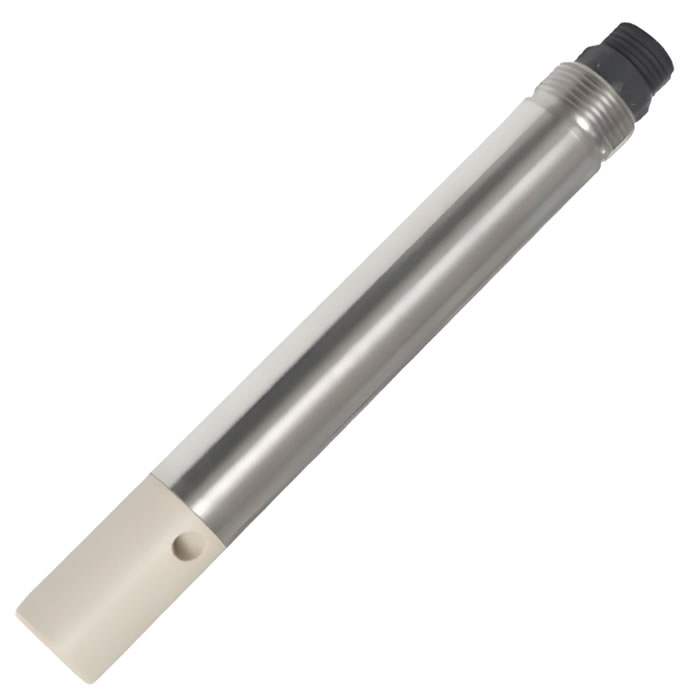
Conductivity is the workhorse of ionic-strength monitoring. The KWS-300 Online Digital Conductivity Sensor uses a 4-electrode measurement with automatic temperature compensation, covers 0 to 5000 μS/cm and 0 to 100 mS/cm across 0 to 50 °C, provides RS485 (Modbus/RTU) output, requires no reagent, and is built with POM and titanium wetted parts inside a 316L stainless steel housing. Municipal water supply, sewage treatment, aquaculture, industrial wastewater, surface water, food processing and chemical industry are the listed applications.
Chloride ion is not the same parameter as conductivity, even though both respond to dissolved salts. Chloride is normally measured by an ion-selective electrode or by titration, and a conductivity reading cannot be converted into a chloride compliance value without a site-specific correlation. Where a specification names chloride, the buyer should confirm the measurement principle, the interfering ions, and the temperature-compensation basis — and should not accept a conductivity channel as a substitute. The specification set reviewed for this article documents conductivity; it does not document a dedicated chloride ion sensor, which is exactly the kind of gap a written clarification request is designed to close.
Algal biomass closes the surface-water loop. The KWS-400 Optical Fibre Chlorophyll Sensor measures chlorophyll-a by fluorescence across 0 to 400 μg/L or 0 to 100 RFU at 0 to 50 °C, with RS485 (Modbus) output, automatic temperature compensation, no reagent and one-point calibration, in a titanium alloy and POM body. Typical uses are surface water monitoring, lake and reservoir environmental monitoring, aquaculture, eutrophication detection and environmental protection online monitoring — and the practical compliance issue there is fouling, so the cleaning interval belongs in the specification, not in the operations manual alone.

The KWS-1000 series extends the same logic to oil-in-water measurement: an ultraviolet fluorescence method with RS485 (Modbus) output, oil ranges of 0 to 50 ppm with 0 to 150 ppm optional, 0 to 50 °C operation, maximum pressures of 6 bar (1001) and 3 bar (1002/1003), titanium (1001/1003) or 316L with titanium optional (1002), an automatic cleaning brush on the 1003 variant, and IP68 protection. Oil field monitoring, pipeline transportation, petrochemical industry, oil pollution detection, sewage treatment and environmental protection are the listed applications.
| Monitoring parameter | Example model | Stated range and envelope | Output and protection | Documentation checkpoint |
|---|---|---|---|---|
| Residual chlorine | KWS-3000 | 0–2.000 mg/L; 5–50 °C; pH 4–9; 30–60 L/h; response <30 s | RS485 (Modbus/RTU); IP68; flow cell | Record sample flow and pH at commissioning; confirm two-point calibration record |
| pH | KWS-750 | 0–14 pH; −5–65 °C; below 0.2 MPa | RS485 (Modbus/RTU); IP68; 3/4 NPT | Reference-junction maintenance interval; calibration procedure |
| pH | KWS-700 / 700A / 700B | 0–14 pH; 0–50 °C; below 3 bar | RS485 (Modbus); IP68 | Factory pre-calibration record; electrolyte-free design basis |
| ORP | KWS-550 | −2000 to +2000 mV; −5–65 °C | RS485 (Modbus/RTU) | Electrode material and cleaning regime; two-point calibration |
| Turbidity | KWS-960C | 0–20.00 / 200.0 / 1000.0 NTU; 0–50 °C; below 0.2 MPa | RS485 (Modbus/RTU); IP68 (20 m) | State the NTU range purchased; request the calibration standard used |
| Ammonia nitrogen | KWS-250 | Range not stated in the reviewed materials | RS485 (Modbus); immersion | Request datasheet; confirm reagent-free operation and temperature/pH compensation basis |
| Nitrate nitrogen | KWS-270-P / -S | 0–1000.0 mg/L | RS485 (Modbus/RTU); 4–20 mA optional | Membrane cap replacement interval; spare-part availability |
| Conductivity | KWS-300 | 0–5000 μS/cm; 0–100 mS/cm; 0–50 °C | RS485 (Modbus/RTU) | Cell constant and temperature-compensation basis |
| Chlorophyll-a | KWS-400 | 0–400 μg/L or 0–100 RFU; 0–50 °C | RS485 (Modbus) | One-point calibration record; biofouling cleaning schedule |
| Dissolved oxygen | KDM-140B | Range not stated in the reviewed materials | Online meter | Request datasheet; confirm sensing principle and calibration routine |
| Oil in water | KWS-1000 (1001/1002/1003) | 0–50 ppm (0–150 ppm optional); 0–50 °C; 6 bar (1001) / 3 bar (1002/1003) | RS485 (Modbus); IP68 | Titanium vs 316L selection; automatic cleaning brush (1003) |
Table 1. Parameter-to-model mapping based on published specification data. Ranges are stated envelope values, not performance guarantees; confirm the current datasheet revision for each model before ordering.
Step-by-Step Breakdown: Building a Compliance File for a Sensor Specification
A compliance file is built in a fixed order, because each step constrains the next. The sequence below is the one that survives audit.
- Fix the parameter set and the reporting basis. Name each parameter, the unit, and the basis of the number — NTU versus mg/L for solids, mg/L for residual chlorine and ammonia, μS/cm or mS/cm for conductivity. A parameter list without units is not a specification.
- Fix the operating envelope. Record the expected temperature, pressure, pH and flow at the measurement point, then check the sensor against those values. The KWS-960C's working pressure below 0.2 MPa and the KWS-700's limit below 3 bar describe very different installation positions.
- Fix the wetted-material list. Match materials to the process fluid before discussing accuracy — POM and titanium on the KWS-300, POM plus platinum-iridium alloy plus 316L on the KWS-550, titanium or 316L on the KWS-1000 series. Material mismatch produces drift that no calibration can remove.
- Request the document package. Certificate with number, issuing body, validity and scope; declaration of conformity where the destination market requires one; the datasheet revision matching the shipped unit; a calibration certificate tied to the serial number; and the test method behind any stated performance figure.
- Verify the signal and integration path. Confirm the output type and protocol — RS485 (Modbus/RTU) is standard across the models above, with 4–20 mA optional on the KWS-270 — and check that the register map is available to the integrator before the PLC or SCADA configuration is frozen.
- Validate on a sample. A sample run against the real matrix is the only step that tests the whole chain at once, and it should be planned before the purchase order, not after delivery.
- Lock the commercial and service terms. Lead time per model, consumable availability (membrane caps, electrodes, cleaning brushes), calibration support and warranty route all belong in the file, because a compliant installation that cannot be maintained stops being compliant.
Use Cases: How Compliance Emphasis Shifts by Application
Municipal wastewater treatment
The reporting emphasis is on organic load and nutrients. A typical channel set combines turbidity (KWS-960C) for solids carry-over, ammonia nitrogen (KWS-250) for nitrification control, and dissolved oxygen for aerator management, with the KMPW100 controller consolidating DO, pH, ORP, conductivity, turbidity, COD and ammonia nitrogen into one cabinet. The documentation question here is timestamp alignment: readings from separate transmitters rarely share a clock, and a consolidated controller removes that argument.
Drinking water and distribution networks
Disinfectant residual and turbidity dominate, with pH as the stabilising variable. The KWS-3000 residual chlorine sensor (0–2.000 mg/L, pH 4–9, 30–60 L/h) paired with a KWS-960C turbidity sensor and a KWS-750 or KWS-700 pH probe covers the standard set. Because disinfection compliance is judged on recorded values, the calibration certificate and the flow-cell commissioning record carry as much weight as the instrument itself.
Aquaculture
Oxygen and ammonia are the operational risks. A representative combination is the KDM-140B dissolved oxygen meter with the KWS-250 ammonia nitrogen sensor, supported by pH and conductivity channels. Here the compliance question is usually internal rather than regulatory: whether the recorded values can be defended against a mortality event, which depends on calibration history rather than on certificate wording.
Surface water, lakes and river stations
Eutrophication indicators lead. The KWS-400 chlorophyll-a sensor provides algal biomass data alongside multi-parameter measurement, and the KWS-800 series multi-parameter sensors cover pH, conductivity, dissolved oxygen and turbidity in one probe. Biofouling is the dominant maintenance issue, so the cleaning interval and the anti-fouling design belong in the specification rather than in the operating procedure.
Industrial effluent and petrochemical sites
Redox, pH, conductivity and hydrocarbons combine. The KWS-550 ORP sensor, a KWS-700 or KWS-750 pH probe, the KWS-300 conductivity sensor and the KWS-1000 oil-in-water sensor form a coherent channel set, with material selection (titanium versus 316L, PTFE-coated assemblies) decided by the effluent chemistry. For flammable or classified areas, confirm the installation requirements with the site's own engineering authority before specifying the instrument.
Comparison Table
The two comparison views below answer the two questions buyers ask most often at the research stage: whether to consolidate channels, and how far a published product list can be used as evidence of capability.
| Decision factor | Single-parameter sensor | Multi-parameter probe or controller |
|---|---|---|
| Parameter coverage | One parameter per unit | KMPW100 controller monitors DO, pH, ORP, conductivity, turbidity, COD and ammonia nitrogen; KWS-800 series probes cover pH, conductivity, dissolved oxygen and turbidity |
| Panel footprint and wiring | One transmitter per channel; more terminals, more power drops | Fewer transmitters and a shared communications path |
| Calibration workload | Separate routine per instrument | Shared controller, but each channel still needs its own calibration and cleaning |
| Failure isolation | A single channel fails alone | A shared controller concentrates risk; confirm channel-level fault reporting |
| Data consistency | Multiple clocks and timestamps | One timestamp base for the whole parameter set |
| Best fit | Single decisive parameter, small site, tight budget per point | New monitoring stations and sites with several parameters at one location |
Table 2. Consolidation trade-offs, based on published product descriptions. No pricing data is implied.
| Entity | Basis of the public listing | Parameter categories publicly listed |
|---|---|---|
| KACISE (Xi'an Kacise Optronics Tech Co., Ltd.) | Company product-page portfolio listing | Online multi-parameter sensors; COD/TOC/organic matter sensors; ORP sensors; fluorescence dissolved oxygen sensors; oil-in-water detection sensors |
| YSI | Competitor product-page category listing | Dissolved oxygen, conductivity, salinity, TDS, pH/ORP, turbidity, algae and temperature measurement |
Table 3. Category presence only. The two listings differ in product scope and presentation format, so this table is not a ranking, not a performance comparison, and not a market-share statement.
FAQ
What compliance documents should I request before a water quality sensor is approved for a project?
Request a package, not a badge: a certificate with number, issuing body, validity period and a scope that covers the product family; a declaration of conformity where the destination market requires one; the datasheet revision that matches the unit shipped; a calibration certificate tied to the serial number; the test method behind any stated performance figure; and the wetted-material list. KACISE publicly reports ISO 9001:2015 certification and CE/RoHS compliance claims; certificate numbers, scopes and validity dates were not available in the sources reviewed for this article, so they should be requested directly from the supplier and verified before award.
Can one multi-parameter controller replace several single-parameter instruments?
In many cases yes. The KMPW100 Multi-Parameter Water Quality Controller monitors dissolved oxygen, pH, ORP, conductivity, turbidity, COD and ammonia nitrogen in one unit, and the KWS-800 series multi-parameter sensors measure pH, conductivity, dissolved oxygen and turbidity at the point of measurement. Consolidation reduces panel space, wiring and the number of clocks in the dataset. The limits are equally practical: a shared controller concentrates failure risk, each channel still requires its own calibration and cleaning, and cross-channel interference must be confirmed with the supplier before the specification is frozen.
What drives cost in a compliant water quality sensor specification?
Cost is driven by the number of parameters and channels, the wetted materials, the cleaning arrangement, the consumables and the documentation work — not by the model name. Material choice alone separates options: titanium versus 316L on the KWS-1000 series, POM plus titanium on the KWS-700 and KWS-300. An automatic cleaning brush (KWS-1000 1003 variant), replaceable membrane caps on the KWS-270, a flow cell for the KWS-3000 and calibration consumables all affect lifecycle cost. No verified pricing data was available for this article, so a written quotation should be requested against the final parameter list rather than estimated from a catalogue.
How should a sample sensor be validated before full procurement?
Test the whole chain, not the instrument alone. Immerse the sample in the actual process matrix, run the calibration routine the model supports — two-point calibration applies to the KWS-3000, KWS-960C, KWS-550, KWS-300 and KWS-270 — and compare the result with the site's reference method. Then verify the digital output into the controller or SCADA over RS485 (Modbus/RTU), check that the wetted materials are compatible with the fluid, and confirm that the datasheet revision delivered with the sample matches the revision in the file.
What should be confirmed about lead time and delivery before ordering?
Capacity and a committed date are different things. KACISE reports a 40,000 m² production facility with an annual capacity of 120,000 units, export business at 70% of total sales and main markets in the EU and USA, but the delivery commitment should still be confirmed in writing per model, together with the availability of consumables such as membrane caps, electrodes and cleaning brushes, and the shipping documentation set. To move from research to evaluation, request a quotation or a sample from KACISE at sales@kacise.com or via WhatsApp on +86 180-6671-9659, quoting your parameter list and operating envelope.
Conclusion
Compliance for a water quality sensor is assembled, not purchased. The certificate proves the management system; the datasheet proves the stated envelope; the calibration certificate proves the individual unit; and the commissioning record proves the reading was taken inside the envelope. A project file that holds all four can survive review even when the underlying documents are ordinary. A file that holds only the first one cannot.
The parameter set should be fixed before the supplier is chosen. Residual chlorine, pH, turbidity, suspended solids, COD, ammonia nitrogen, dissolved oxygen, conductivity and chloride each carry their own range, material and maintenance logic — and each carries its own documentation obligation. Where a parameter is not documented in the materials a supplier has published, the correct response is a written clarification request, not an assumption, and the same rule applies to chloride ion relative to conductivity, TSS relative to turbidity, and COD relative to a portfolio-level listing.
Finally, regional matching should be read as a question about the reporting obligation rather than about the instrument. The sensor measures; the jurisdiction defines what the measurement must prove. Matching the two is the buyer's job, and it is the part of the process that no datasheet can do on its own.
Next Step: Sample, Quotation or Documentation Package
KACISE supplies online water quality sensors and multi-parameter controllers for drinking water, wastewater, aquaculture, surface water and industrial process applications. If you are preparing a specification, send the parameter list, the operating envelope and the destination market, and request a sample, a quotation or the documentation package for the models under review.
Email: sales@kacise.com | Tel / WhatsApp: +86 180-6671-9659 | Website: kcsensor.com
Have Questions or Need More Details?
Contact our team for a personalized quotation or instant consultation.
Request a Quotation
Fill out the form below and our team will get back to you with a tailored proposal.
WhatsApp Direct Chat
Prefer to chat in real-time? Message us on WhatsApp for instant assistance & quick answers.
- Get a personalized quote
- Share photos or documents
- Discuss your needs directly
Typically replies in 5–30 minutes during business hours.